20 Updos for Thick Hair That Actually Stay Up

An updo holds in thick hair when you build it in sections and anchor it in more than one place. Dragging all your hair into a single elastic and hoping for the best is where most updos fail. Weight is the whole problem. One ponytail base carrying a full head of thick hair will slide, sag and pull itself loose by noon. Split the hair into two or three anchored sections instead, and spray dry hair with texturizing spray first for grip. The same fullness that defeats a normal bun then becomes built-in volume that helps the style hold its shape.
Most updo advice is written for hair that needs padding. Thick hair needs the opposite. It needs the weight spread out. Stylists who dress thick hair work with its fullness instead of fighting it. They use braids, twists and knots to lock the hair in place rather than trusting a single band. They place pins in crosses, so each pin helps hold the next one. And they pick styles that spread the load across the whole head. That is why the fullest-looking updos, like beehives, braided crowns and big textured buns, are honestly easier on thick hair than on fine hair.
The 20 styles below come from updo guides published for thick hair in particular. They run from a two-minute claw clip to a braided knot that is worth booking a stylist for. Each one explains how the style is built, the trick that keeps heavy hair secure, and where it works best. Count your pins before you start. Thick hair goes through more of them than any tutorial admits.
1. Textured Mid-Placement Bun
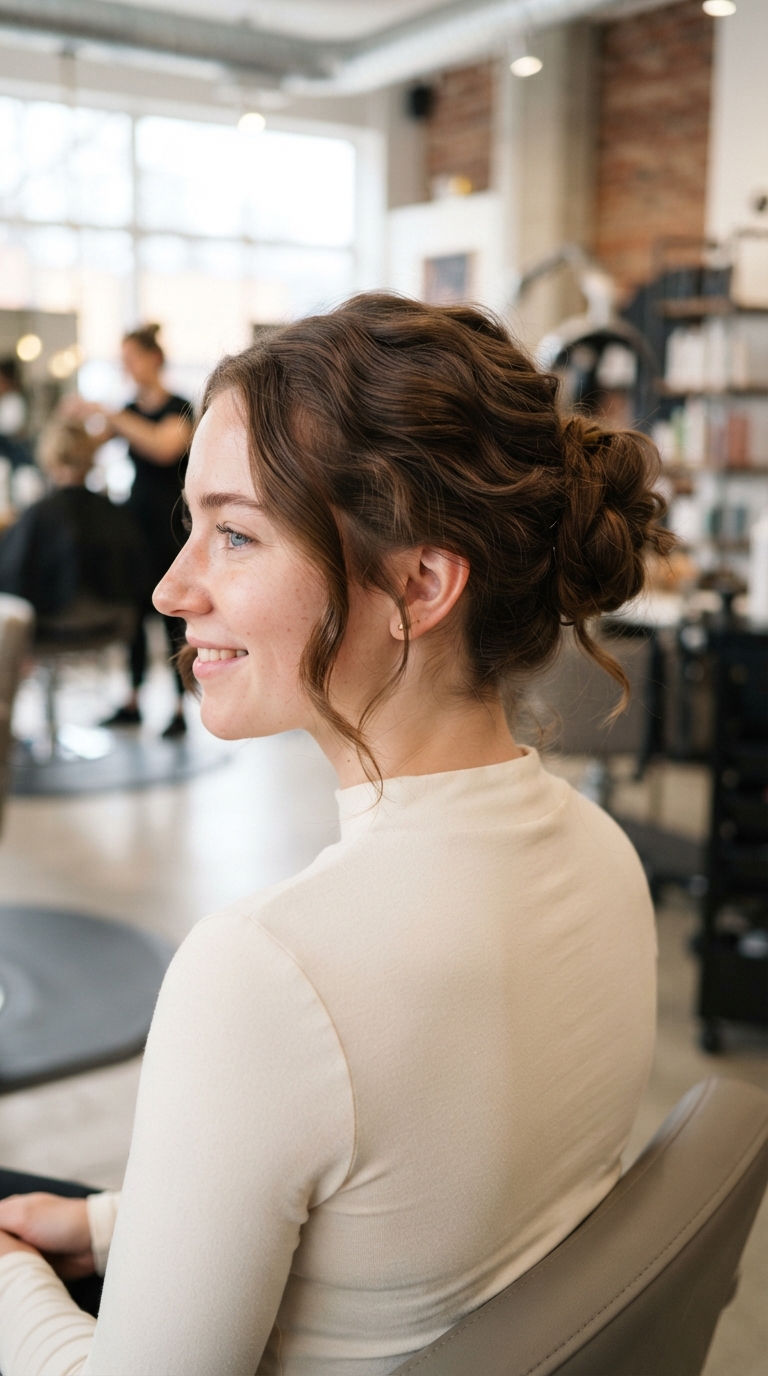
This is the everyday bun for thick hair, placed at the middle of the back of the head and twisted loosely rather than wound tight. The middle placement is what makes it work. A bun at the crown carries all its weight on one point and drags, while a bun at the nape can look droopy. The middle spreads the load and balances the shape. Work texturizing spray through dry hair first for grip. Twist the ponytail loosely, wrap it and pin it with bobby pins, then pull a few face-framing pieces loose. It dresses up or down with nothing changed but your outfit. Pin in two directions, because thick hair will pry a single-direction pin out within the hour.
2. Sleek Centre-Part Chignon
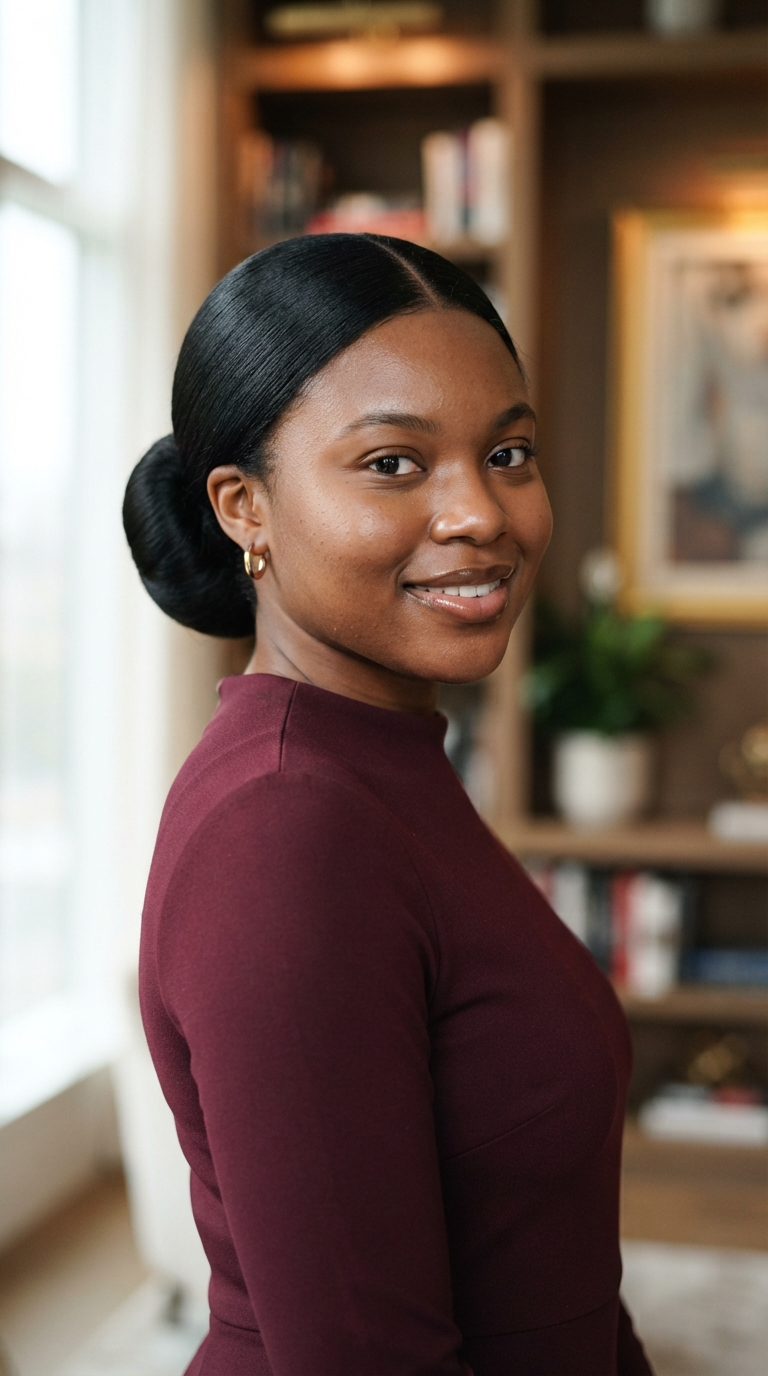
This is the formal option, a clean centre part balanced by a soft, cushioned low bun at the nape. Thick hair is an advantage here because the chignon looks full and rich without any padding or donut. Build it as a low ponytail first, then twist the length into the bun and pin it flat against the head in sections. Smooth flyaways down with a little pomade on your fingertips, and finish with a shine spray so the surface looks polished. It is the wedding and gala option because nothing moves, and the strong part does most of the styling work for you. Ask your stylist for "a low chignon with a clean centre part, pinned in sections, nothing teased."
3. Slicked-Back Puff
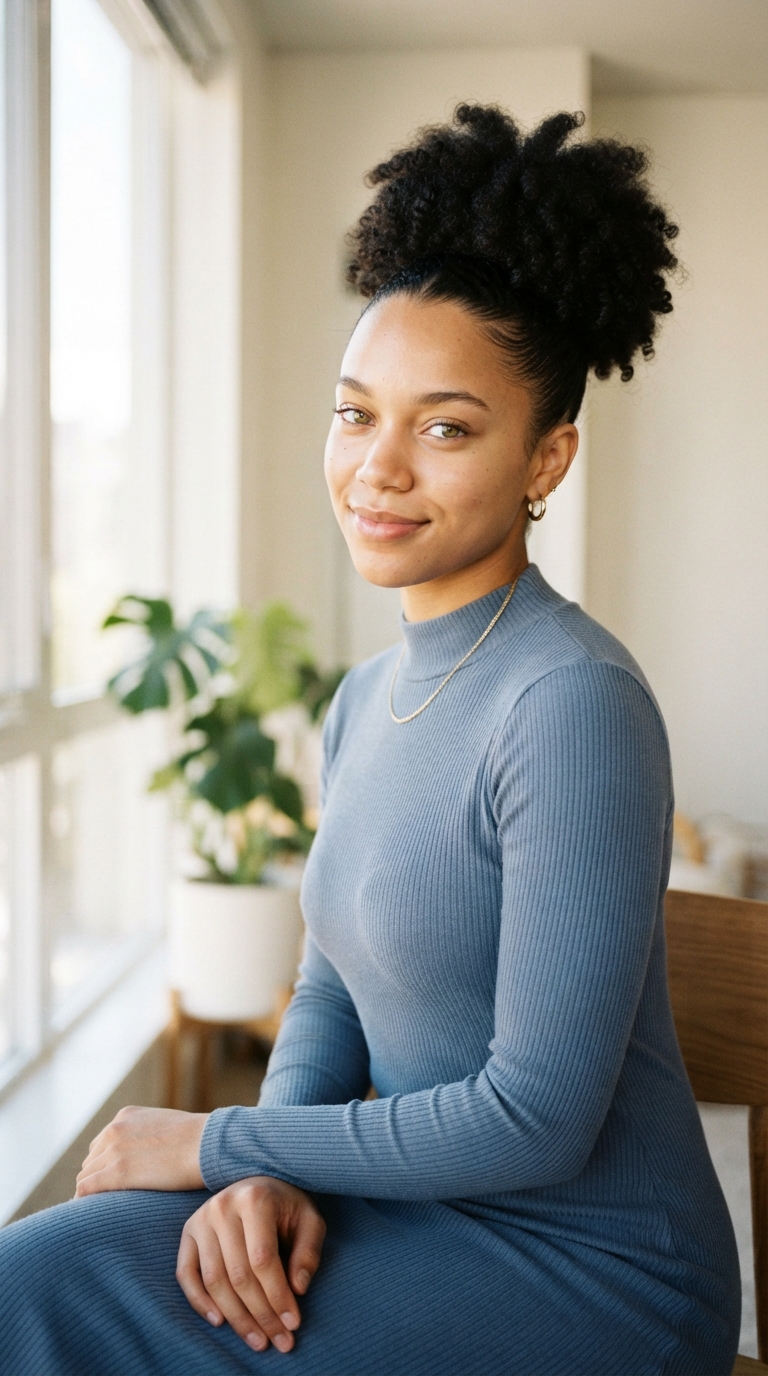
This updo lets natural curls be the whole point. The front and sides are smoothed back tight while the curls sit high and full on top. Work an air-dry cream through the mid-lengths and ends. Smooth gel along the roots and hairline with a soft-bristle brush, then secure everything with a satin scrunchie or a puff cuff instead of a thin elastic that would saw into the curls. Scrunch a light mousse into the puff to keep the definition without any crunch. The contrast is what makes it look elegant. Sleek at the edges, and volume where it counts. Keep the front pieces gelled flat, because on thick curly hair one escaped section changes the whole shape.
4. Freestyle French Twist
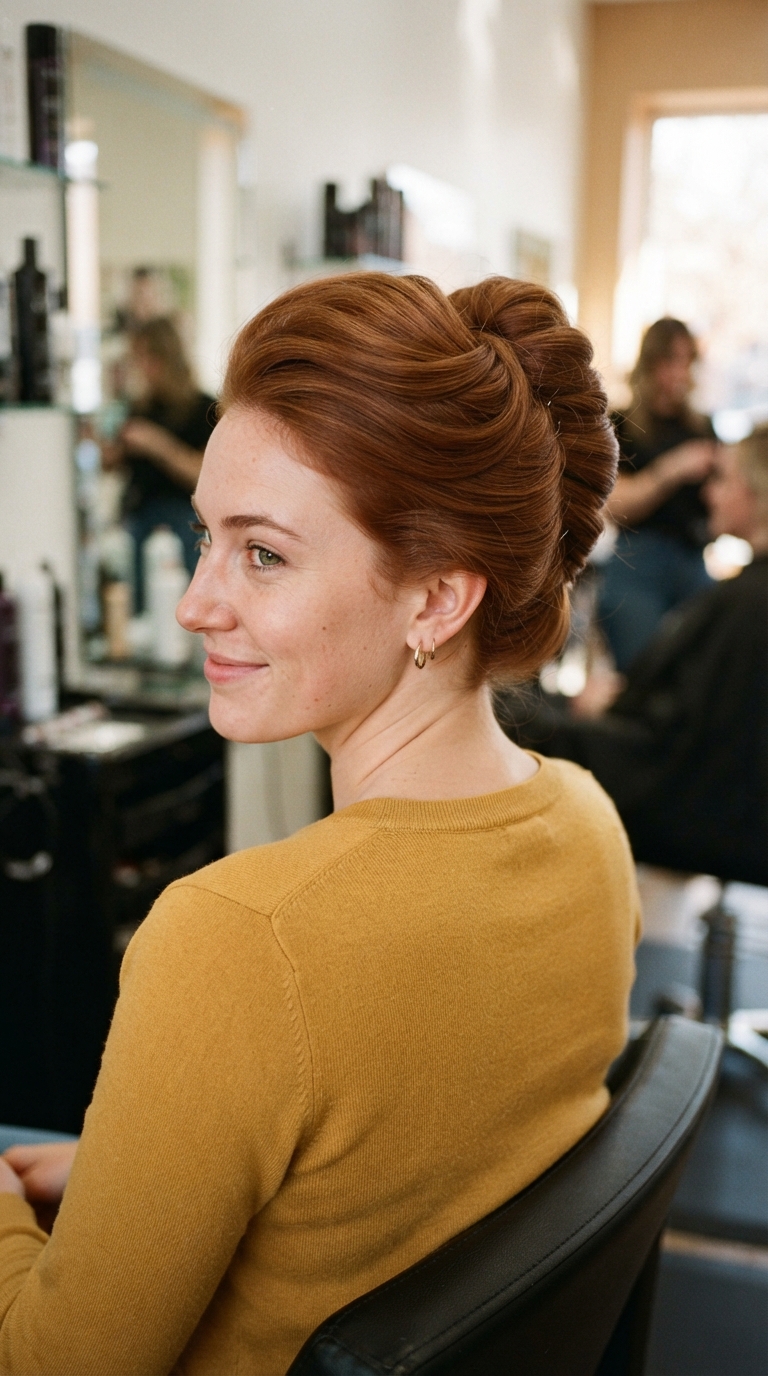
A French twist is a classic that thick hair fills out beautifully, because the roll needs exactly the fullness you already have. Section the top out first. Brush all the hair to one side and pin a vertical line of bobby pins up the back. Then sweep the hair the other way and twist it upward against your head, tucking and pinning as you go. Tease the crown lightly if you want height, and let the top pieces fall where they like. That loose finish is the freestyle part. Be honest about the difficulty, though. Stylists themselves suggest booking a professional for this one when the event matters, because pinning the back of your own head without seeing it is genuinely hard. Done well, it holds all evening on pins alone.
5. Braided Crown Updo
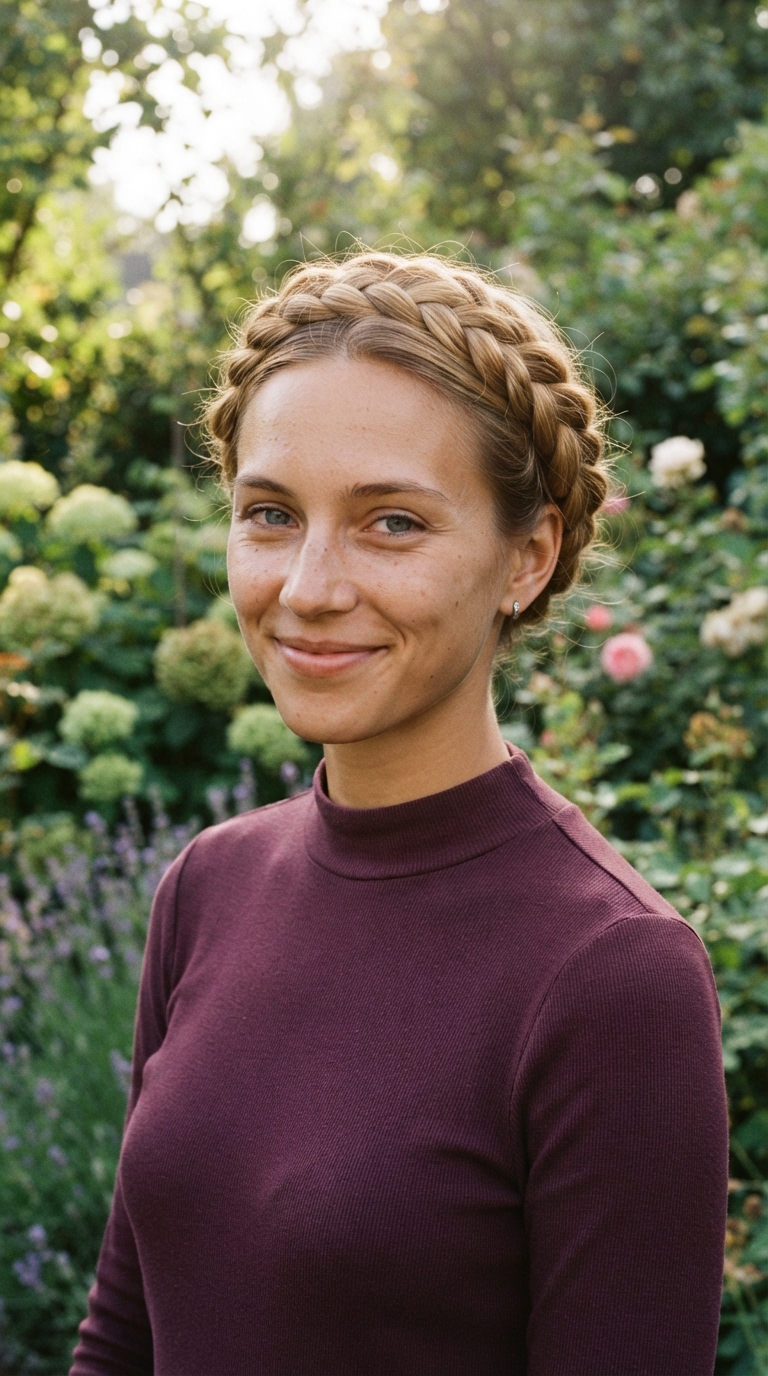
Two braids wrapped across the crown and pinned down make this the romantic option, and it uses thick hair's best asset. Braids with real dimension. Braid each side, lay the braids over the top of your head in whichever direction suits your part, and pin them flat with bobby pins while tucking the ends underneath. Before pinning, loosen each braid gently with your fingertips so the crown looks soft and full rather than tight and schoolgirl. The braids can sit forward near the hairline or further back like a headband. It is also one of the most comfortable formal styles thick hair can wear, because the weight is carried all around the head instead of at one point. Nothing pulls, even at hour six.
6. Modern Beehive
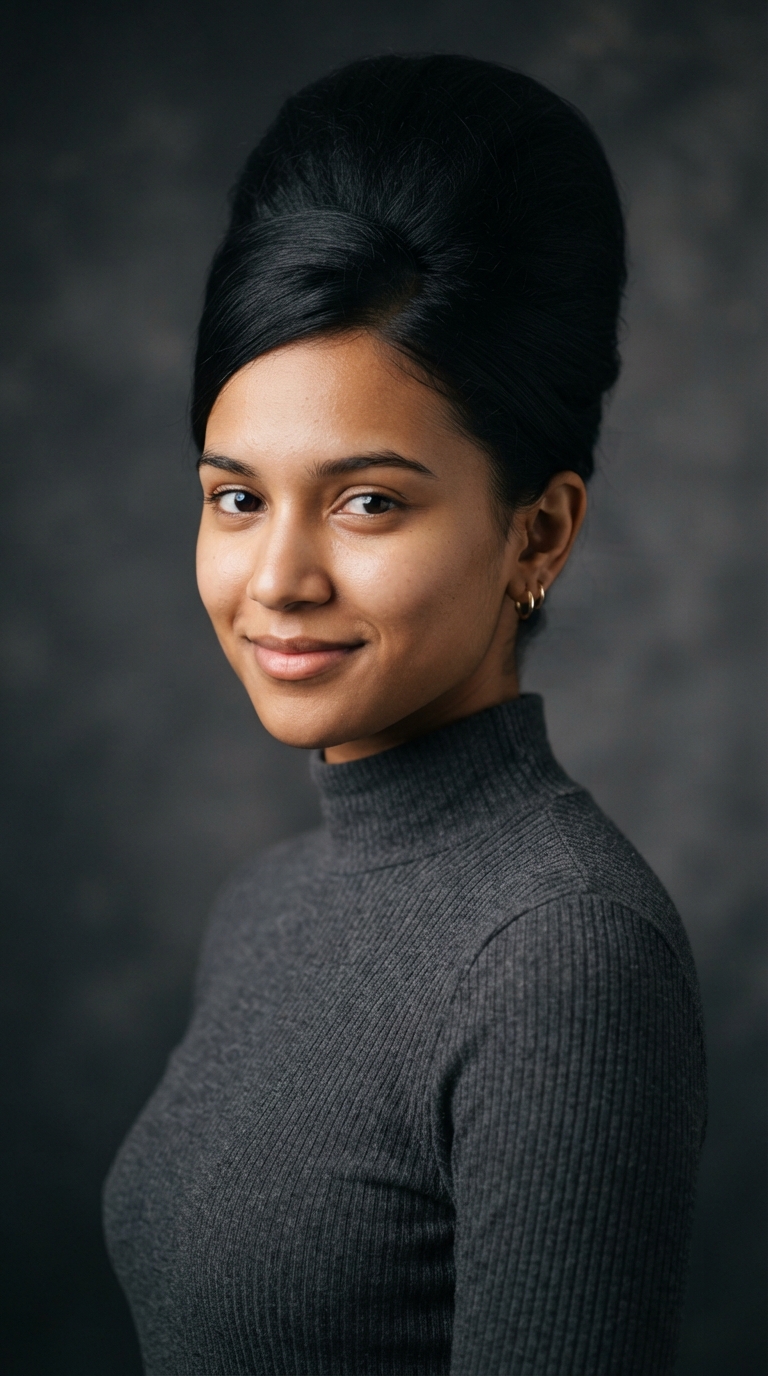
The beehive is the French twist's louder relative, with sleek sides and a seriously teased, high top. You build the shape by backcombing the crown section hard. Stylists joke that no amount of teasing is too much here. Then you smooth the surface hair over the padding your own hair provides and tuck the ends underneath. Thick hair is the ideal candidate because the volume is real, not sprayed in. Pin the tucked ends well and finish with a finishing spray wax to lay flyaways without dulling the shine. It is an evening style with real presence. It also survives a night of dancing better than any loose style, because everything is pinned against the head.
7. High Textured Ponytail
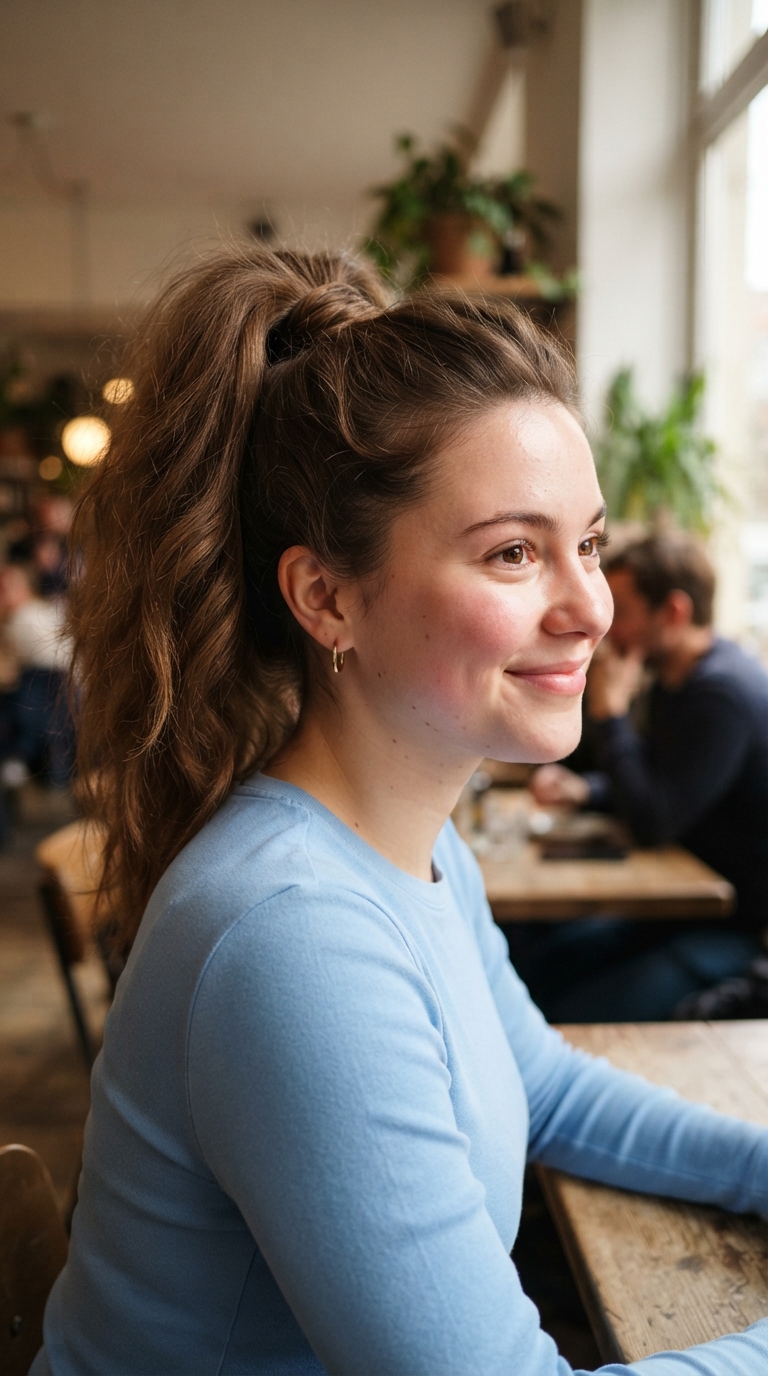
Every stylist who works with thick hair counts a well-built high pony as an updo, because it is structure, not a default. Mist texturizing spray through the mid-lengths and ends. Gather the hair high at the crown, and tilt your head back while you gather so the underside stays smooth. Secure it with a strong elastic. Lightly tease the ponytail itself for fullness, then wrap a thin section of hair around the base to hide the band. The height is what makes it flattering, because it lifts the whole face and lets the thickness swing where it can be seen. If your hair is very heavy, anchor it with two elastics or a bungee band. One thin band will slide down your head by midday.
8. Braided Knot
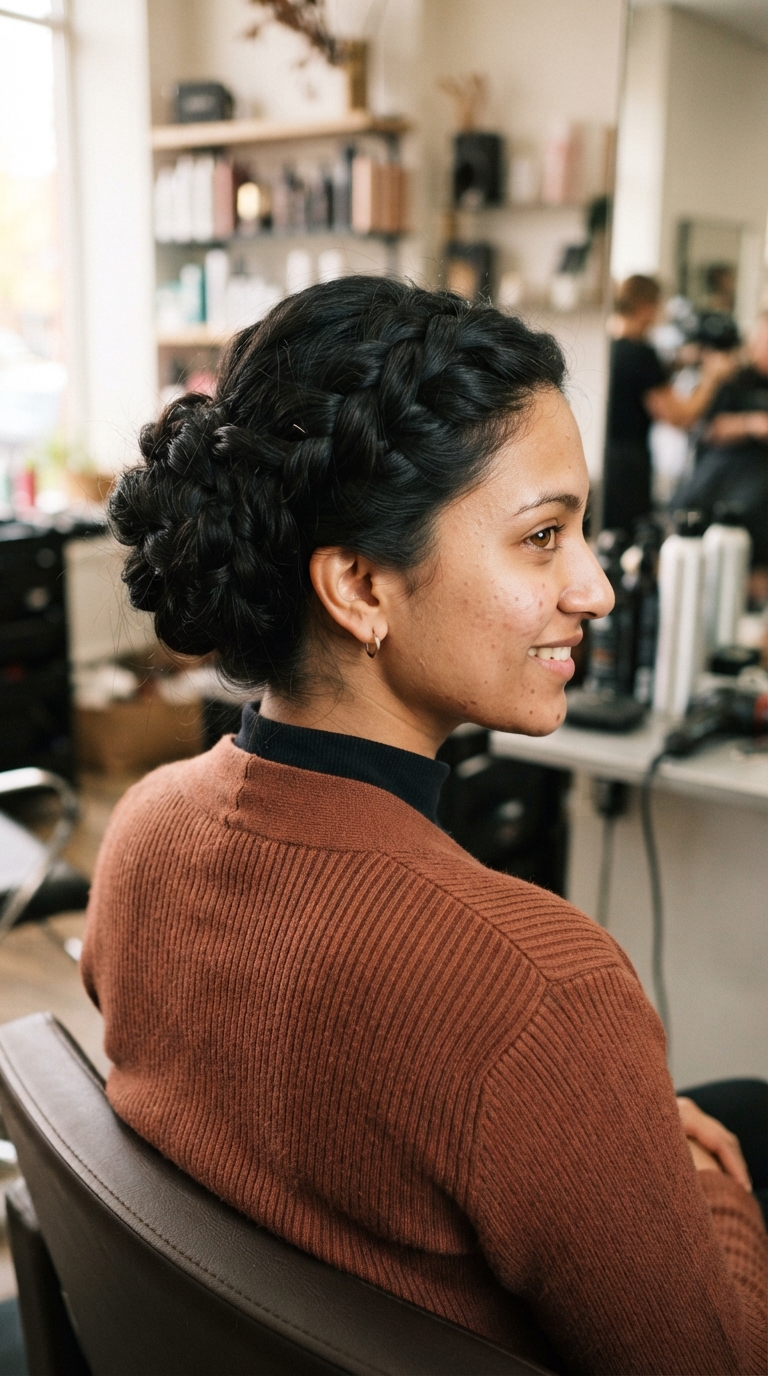
Cornrows or braids are wound and shaped into a knot here, worn high or low, detailed or simple. It is the most intricate style on this list. The braids do the structural work. Once the hair is braided it cannot slip, swell or escape, and the knot is pinned as one solid piece. If you want softness at the edges, leave the ends of a few braids unbraided so curls show. For most people this is professional territory, because shaping a knot at the back of your own head without seeing it is close to impossible. Book it, and it will outlast the event, the weather and the dance floor. Decide the knot's placement with your stylist first, crown for drama or nape for elegance, because the braiding pattern is built around it.
9. Space Buns
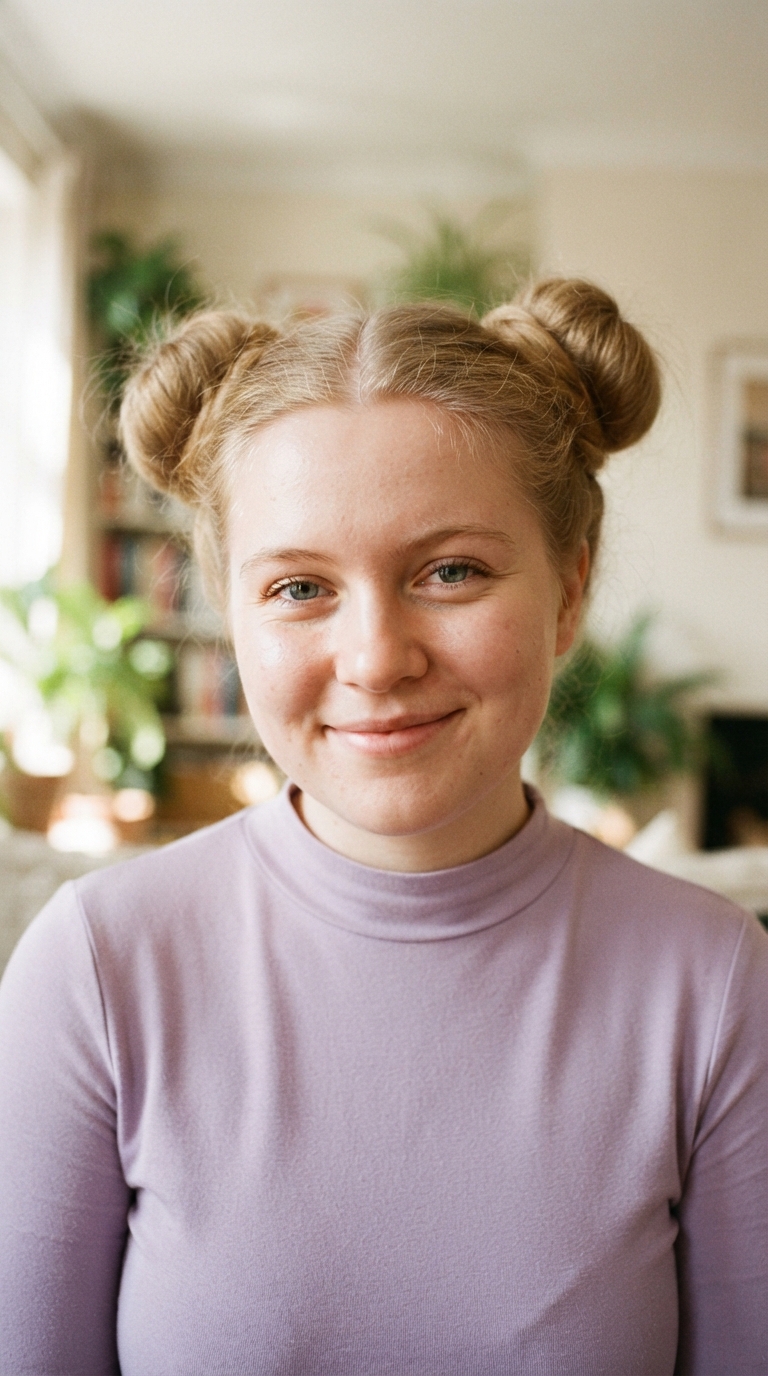
Space buns look playful, but they are also a real solution for thick hair. Splitting the hair in half halves the weight each bun has to hold. Make a centre part and spray the hair with texturizing product for grip. Create two ponytails, twist each one into a rounded bun and secure it tightly, then add bobby pins around each base for insurance. The style works especially well on natural curls, because the texture locks the twists in place. Space buns on thick hair have real presence. The fullness that overwhelms one bun looks deliberate in two. Keep the part crisp and the buns matched in height. Uneven buns are the difference between deliberate and accidental.
10. Nineties Claw Clip Updo
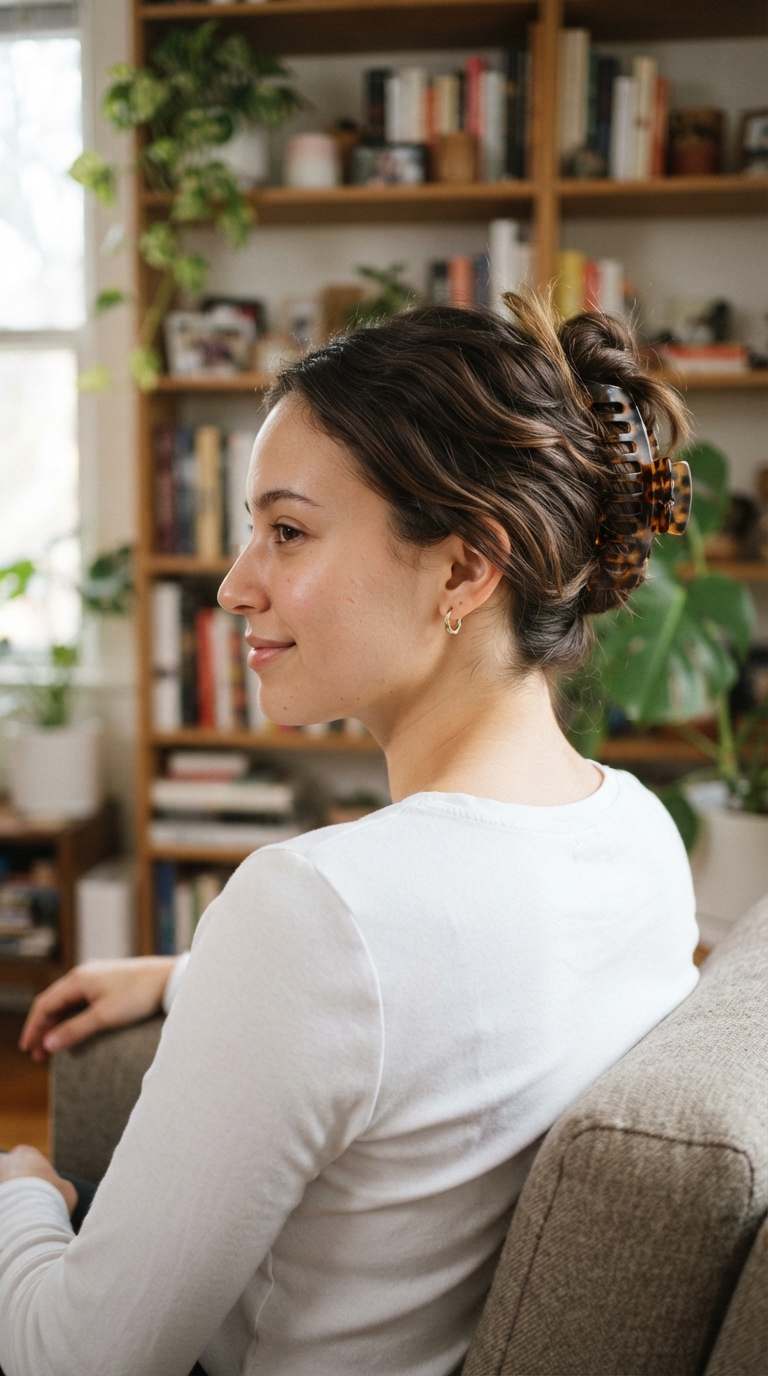
This is the two-minute option, adjusted for hair that breaks small clips. Gather your hair into a ponytail and twist it upward against the back of your head. Clamp a large, sturdy claw clip over the twist, and let the ends fall forward over the top of the clip. That fall of hair hides the clip, so the result looks like a style rather than a shortcut. If your hair is very heavy, add two or three bobby pins at the sides. Buy the biggest clip you can find and check its spring before you rely on it. This is the everyday workhorse for the desk, the school run and going from the gym to dinner, with your hair genuinely off your face and neck.
11. Pineapple Bun
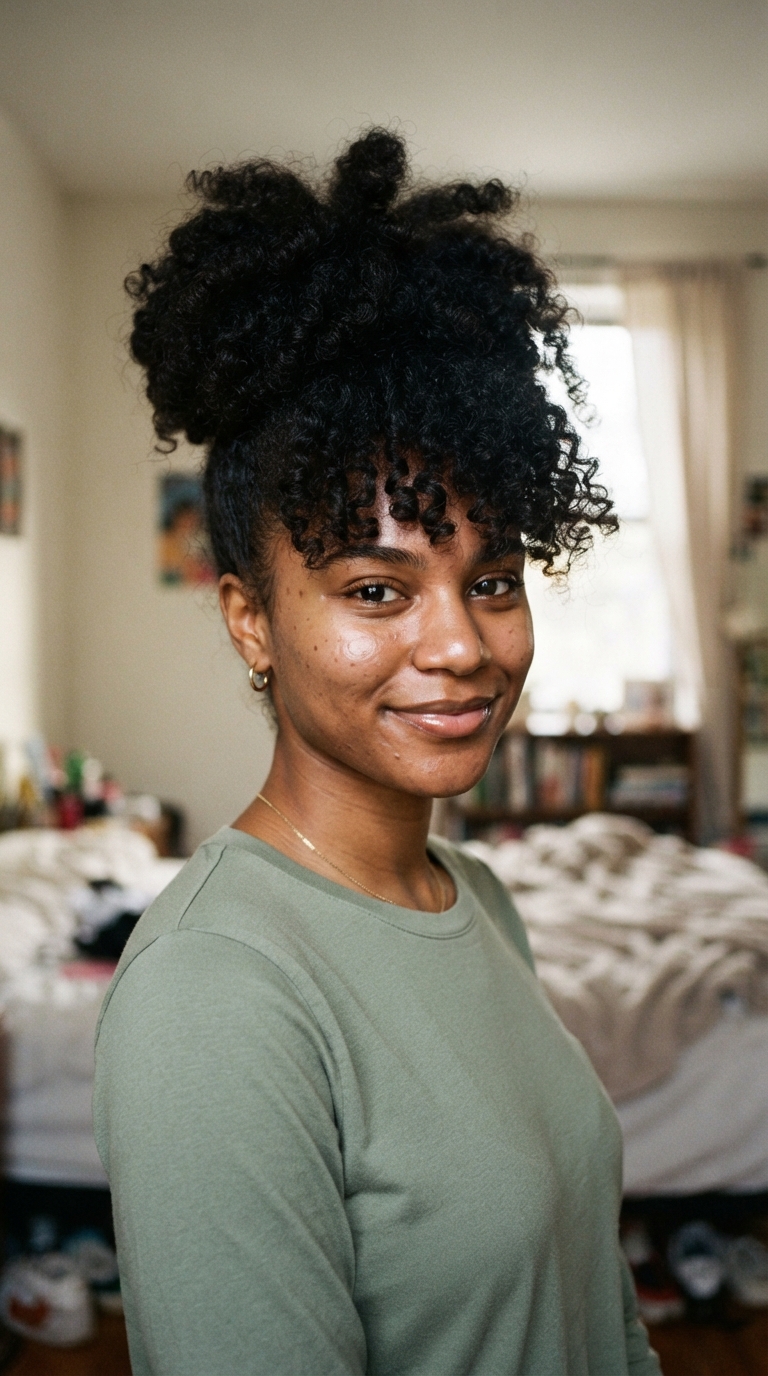
The pineapple is the staple for curly hair and shorter lengths. All the hair goes into one very high ponytail with a scrunchie, so the curls spill forward over the top like the leaves of a pineapple. The scrunchie is not optional. Use satin or silk, never a thin elastic, because the whole point of this style is zero friction and no dent. For an everyday version, let the curls fall where they want. For a dressed-up take, arrange them to fall to one side and pin the longest pieces. It takes under a minute, it protects your curl pattern instead of crushing it, and it doubles as the way to sleep on a style you want to keep for day two.
12. Fishtail Braid Bun
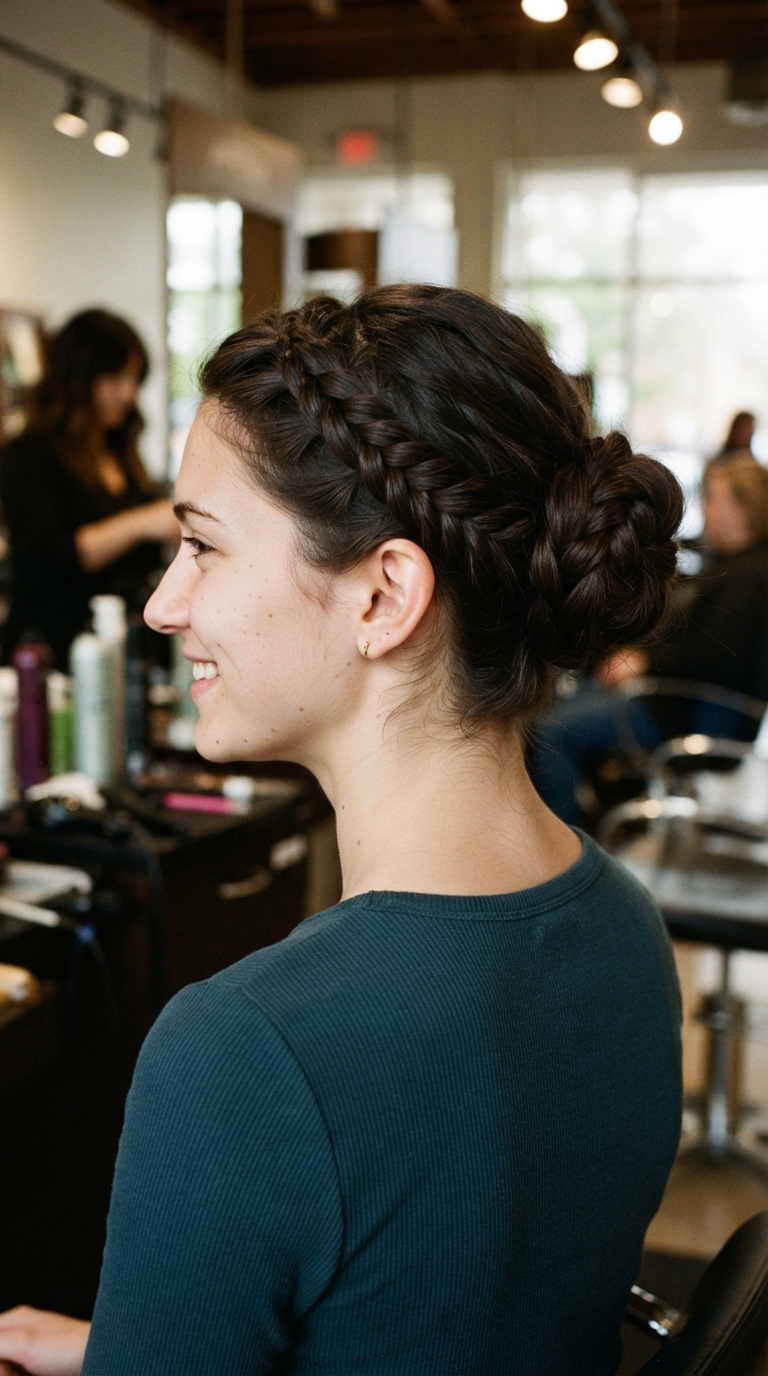
This bun has its detail built in. Tie a little more than half your hair into a loose bun at the top-back of your head. Split what remains into two fishtail braids, wrap them around the base of the bun, and pin as you go. The braids hide the bun's elastic and its weakest pins, and they add the texture that makes the style look intricate. It also wears well when it is slightly undone. Messiness adds charm here instead of looking like failure, which makes it forgiving for beginners. On thick hair the fishtails are satisfyingly chunky. Loosen them a little after braiding so the wrap covers more of the bun.
13. French Braid Bun
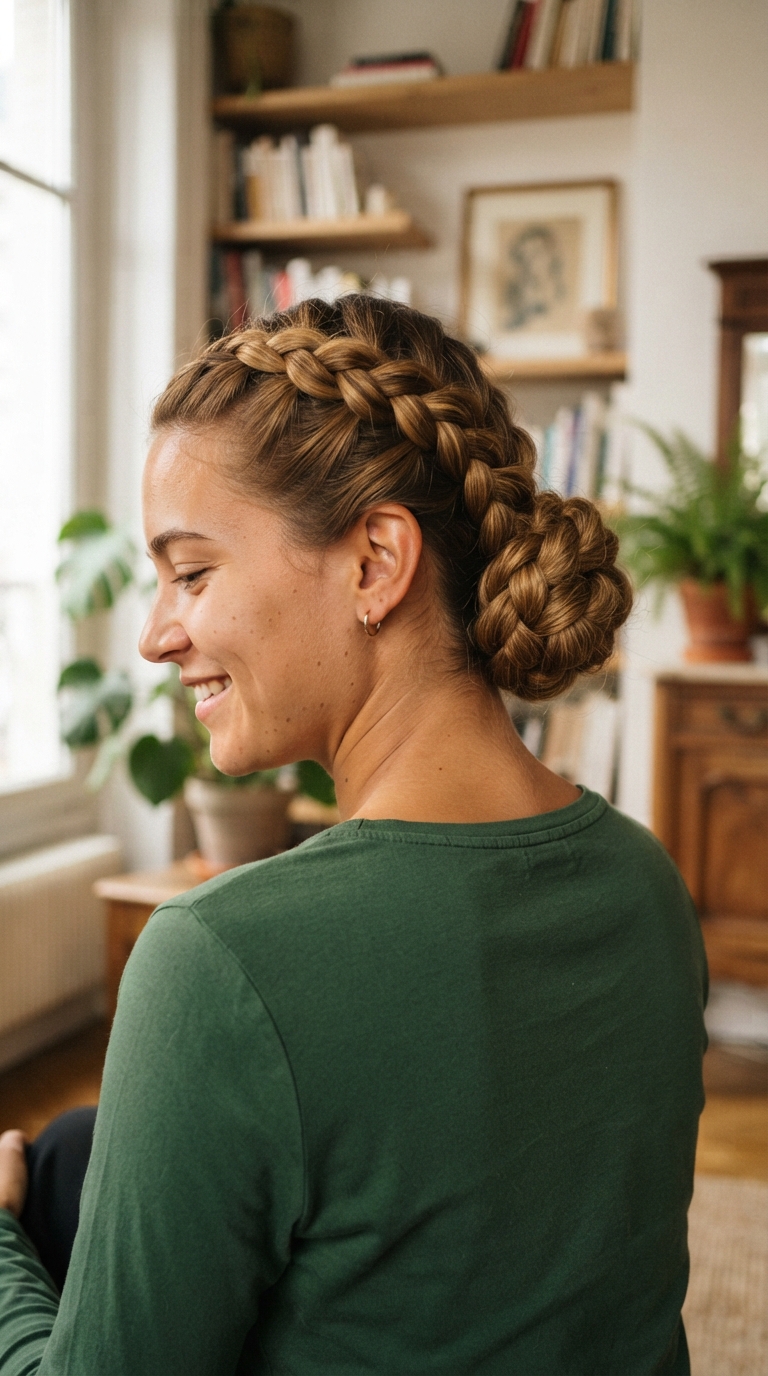
This is the polished braided option and the formal-event classic. Split your hair in two and French braid both sides from the hairline back. Then wind the two braids together at the back and tuck each end into the other, pinning generously until the whole thing feels like one piece. The design is the two braids meeting in the centre. It looks woven rather than piled. Decorative clips can go over the join for weddings. It takes practice or a second pair of hands, so rehearse it once before the day you need it. Once it is built it is close to indestructible, because the braiding leaves nothing loose to fall.
14. Double Elastic Ponytail

This is the gym-proof fix for a ponytail that slides. Gather a normal ponytail. Then split the ponytail itself in two, pass the elastic down between the sections, and secure it again. The doubled anchor locks the band against your head instead of letting the weight of your hair walk it down. Stylists recommend it for exactly that reason. Heavy hair defeats a single elastic by leverage, because the tail pulls, the band tilts and the whole thing sags. Add a braid through the top section if you want detail with your security. It costs about thirty extra seconds and works for runs, workouts and long shifts where a redo is not an option.
15. Chunky Braid Updo
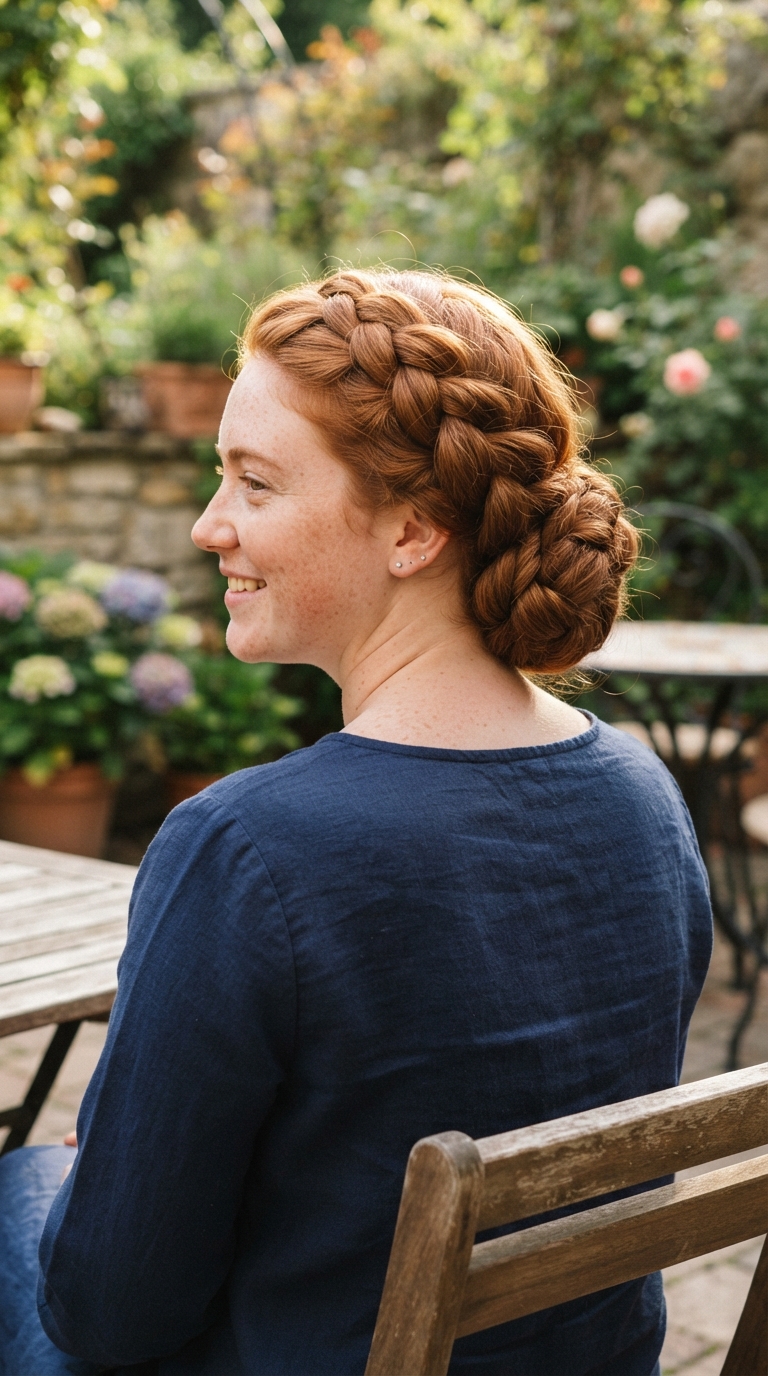
One oversized French braid, swept up and pinned, casual in a way that still looks deliberate. Braid loosely with big sections, because the chunkiness is the style. Then coil or fold the braid against the back of your head and pin through the edges of the braid so the pins hide inside the weave. Thick hair makes this braid look full rather than effortful. It is also a great hot-weather style, because the braid keeps every strand off your neck in one locked structure. And it forgives second-day hair better than any sleek style. Once it is pinned, pull gently at the loops of the braid to widen it. A tight, thin braid looks unfinished on a full head of hair.
16. Halo Fishtail Braid
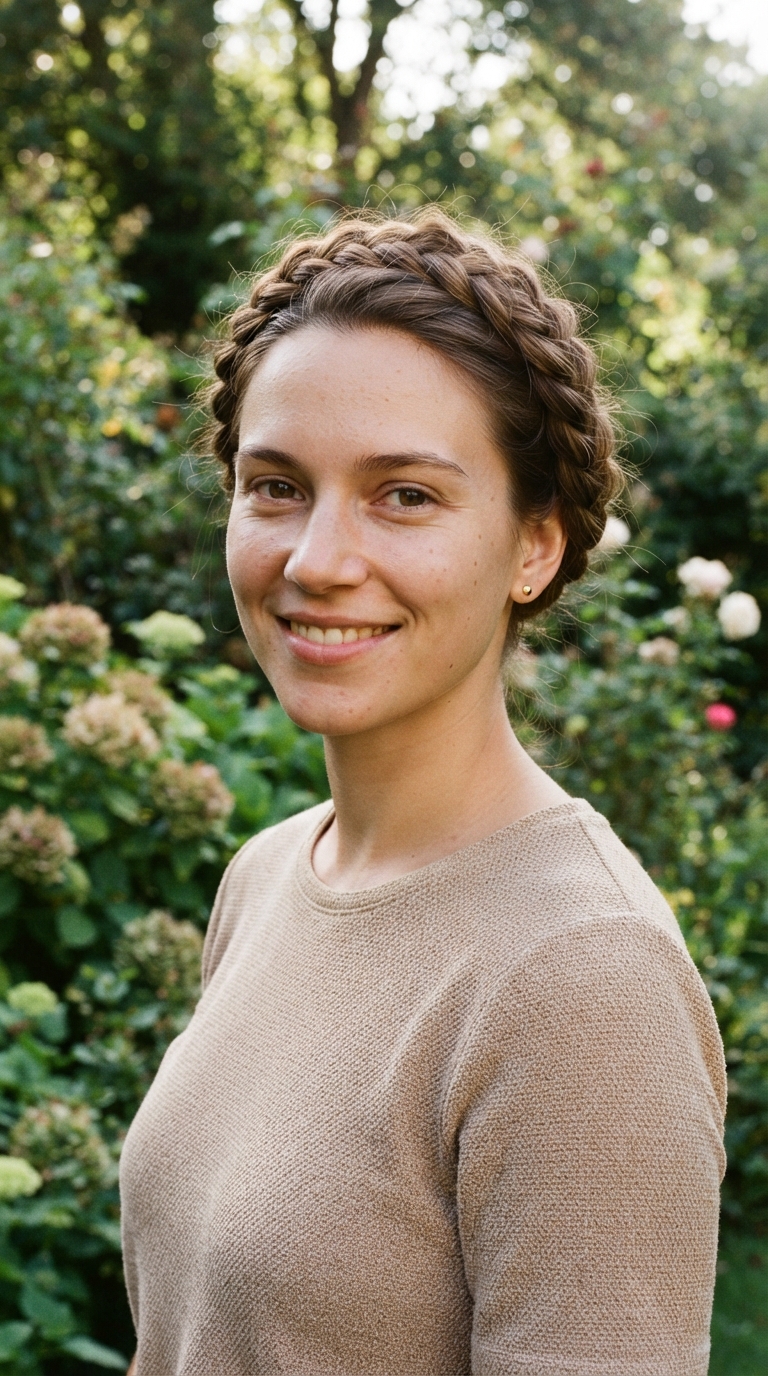
A fishtail braid wrapped in a full circle around the head, like a halo. It is polished enough for events and practical enough for festivals. You can braid the fishtail starting behind one ear and work around the head, picking up hair as you go. Most people find it easier to braid one long fishtail first and then pin it into the circle. Pin along the braid every few centimetres and tuck the end into the start so the join disappears. The comfort comes from how the weight is spread. Like the braided crown, a halo carries its load all the way around, so no single point aches by evening. Texture the braid as you go. A fishtail pulled slightly loose shows its weave far better than one braided tight.
17. Twisted Crown Half Updo
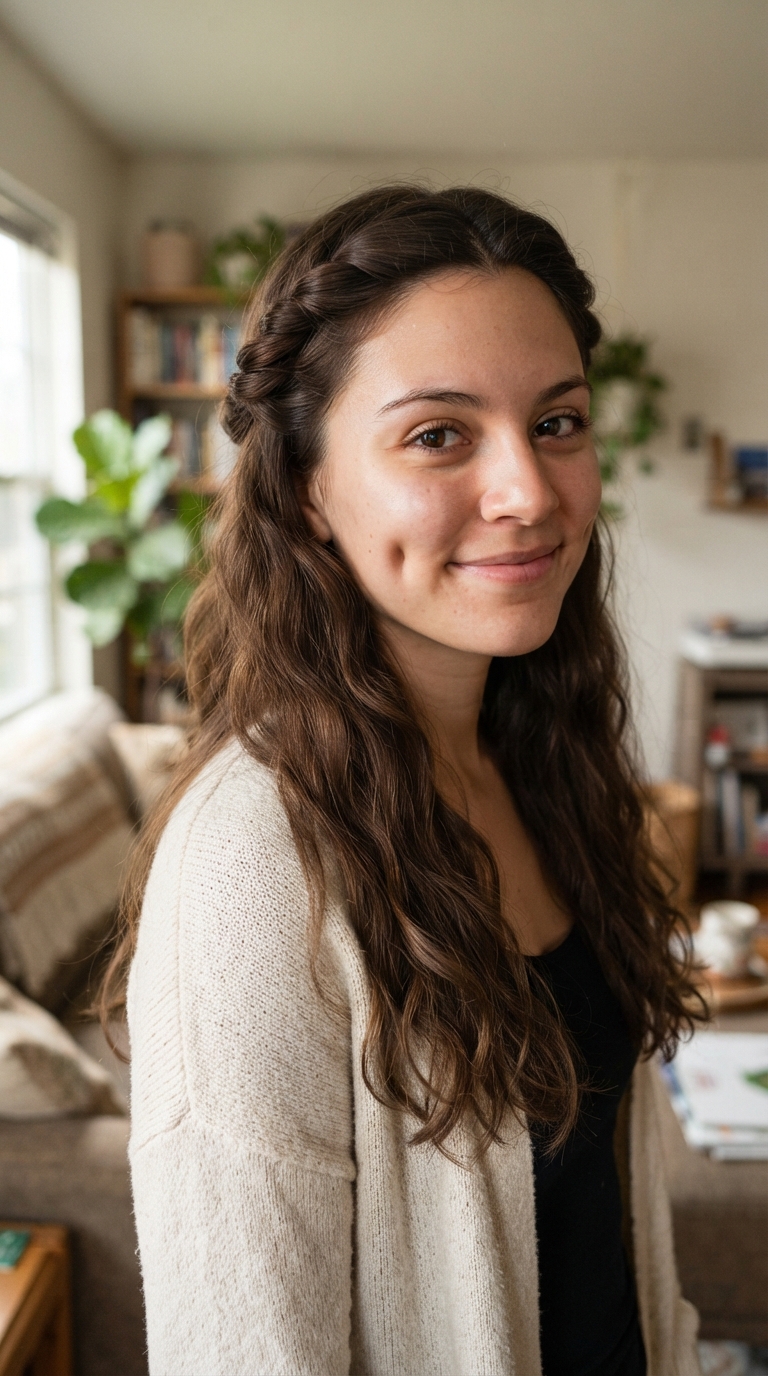
This is the compromise style for hair you mostly want to wear down. Take a section from each side at the temples and French twist each one back along your head. Twisting instead of braiding gives a softer rope effect. Join the two twists in the middle at the back with crossed bobby pins. The lengths stay down and loose, but the front is lifted off your face and the crown has shape. On thick hair it looks rich, because the twists have real substance. It is also the fastest rescue for hair that has gone flat at the front by afternoon. Five minutes and four pins, and the style looks deliberate again.
18. Half-Up Mohawk Braid
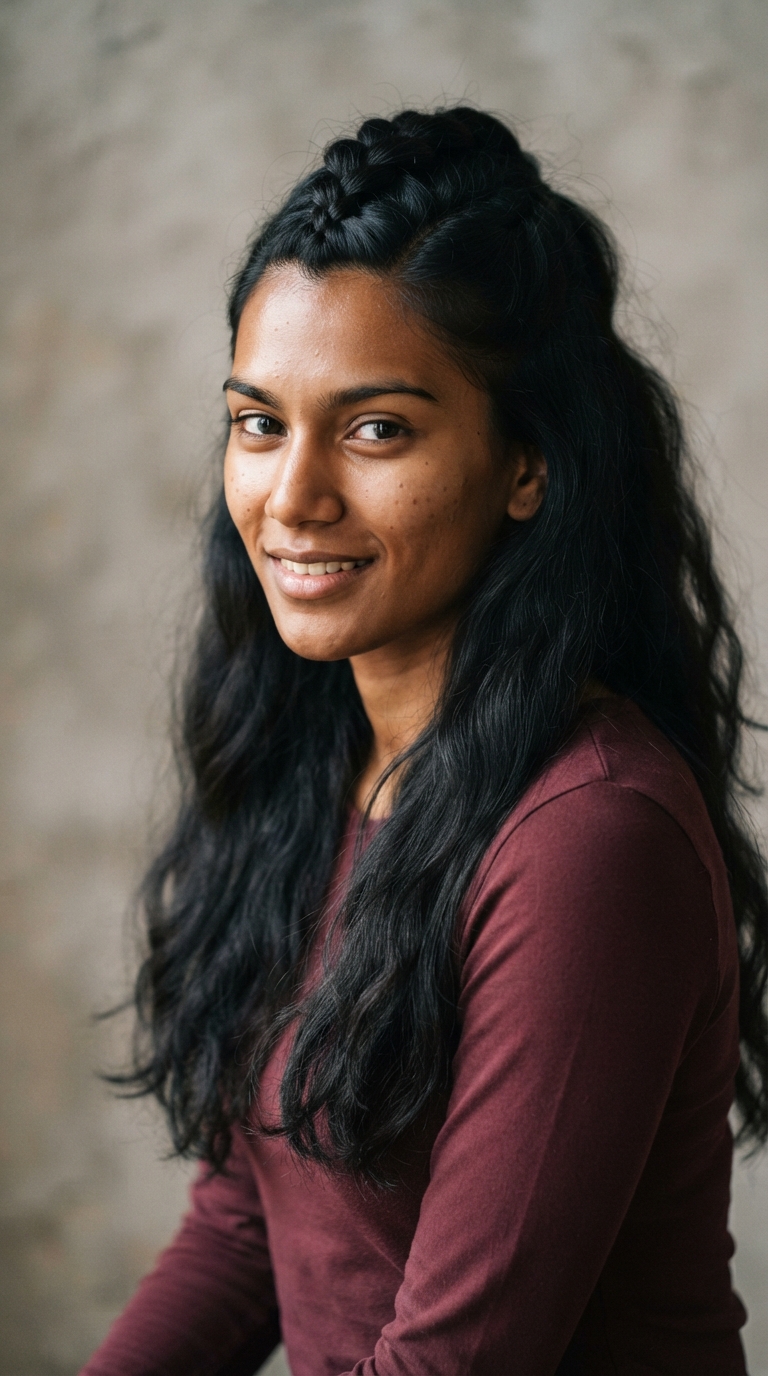
A wide braid runs along the top centre of the head like a mohawk, with the rest of the hair worn down. It is the edgiest option here. Section a generous panel from your hairline to your crown and fishtail or French braid it back. Secure the end flat with pins hidden under the loose hair. Thick hair makes the braid wide and dramatic without any teasing. The contrast is the effect, structured on top and free underneath. It suits anyone who finds full updos too severe but still wants the face clear and the style noticed. Keep the side sections sleek so the braid stays the single focal point.
19. Pinned Curls Updo
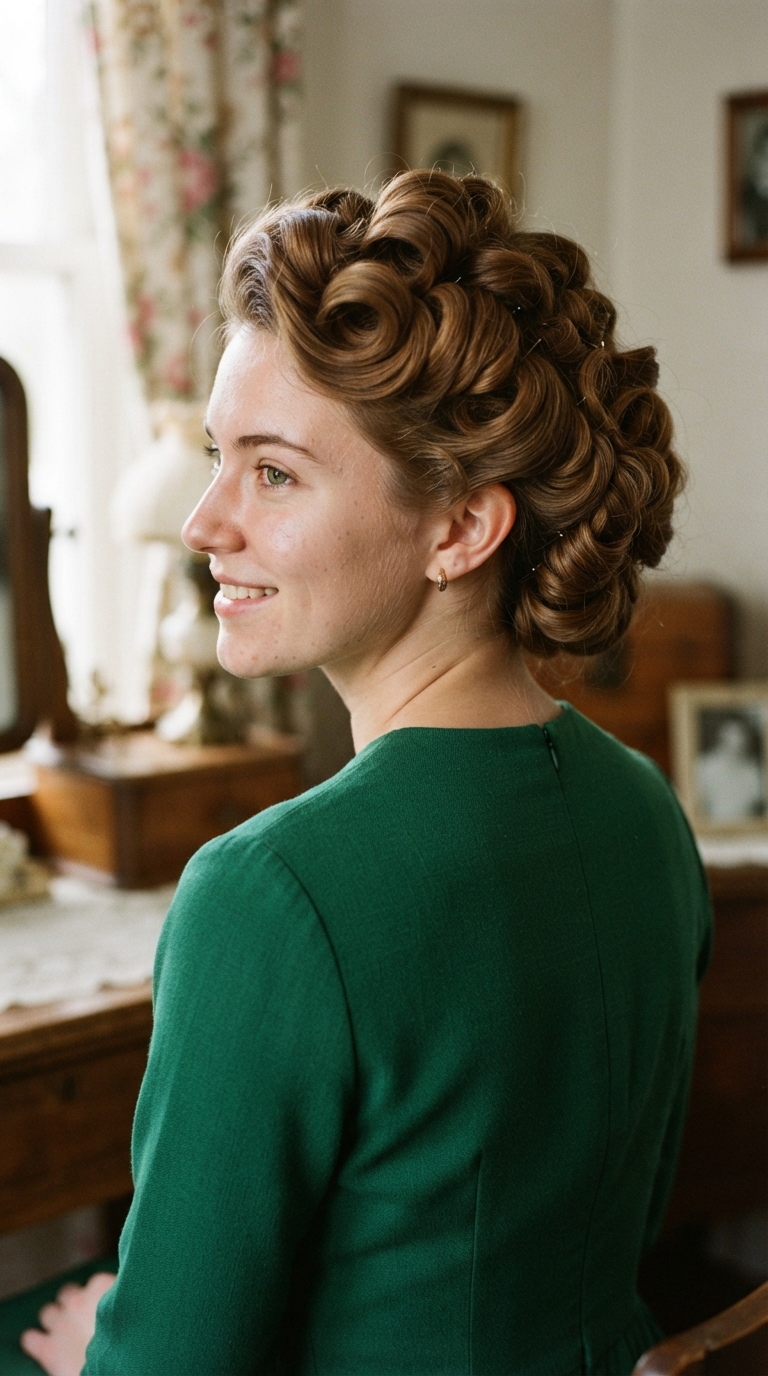
This style is built curl by curl. You curl the hair all over with a barrel iron, then pin each curl up in place so your head becomes a cluster of defined loops. It works on thick hair because the density fills the cluster, with no gaps, no padding and no extensions needed. It even works at bob length. Pin each curl while it is still warm from the iron, and let the whole set cool completely before you touch anything. Cooled curls hold their shape for hours, while warm curls that get disturbed drop fast. Hide the pins inside the curls so the hardware disappears. It is the most romantic style on this list, and the one that photographs best because every angle has detail.
20. Bouffant Updo
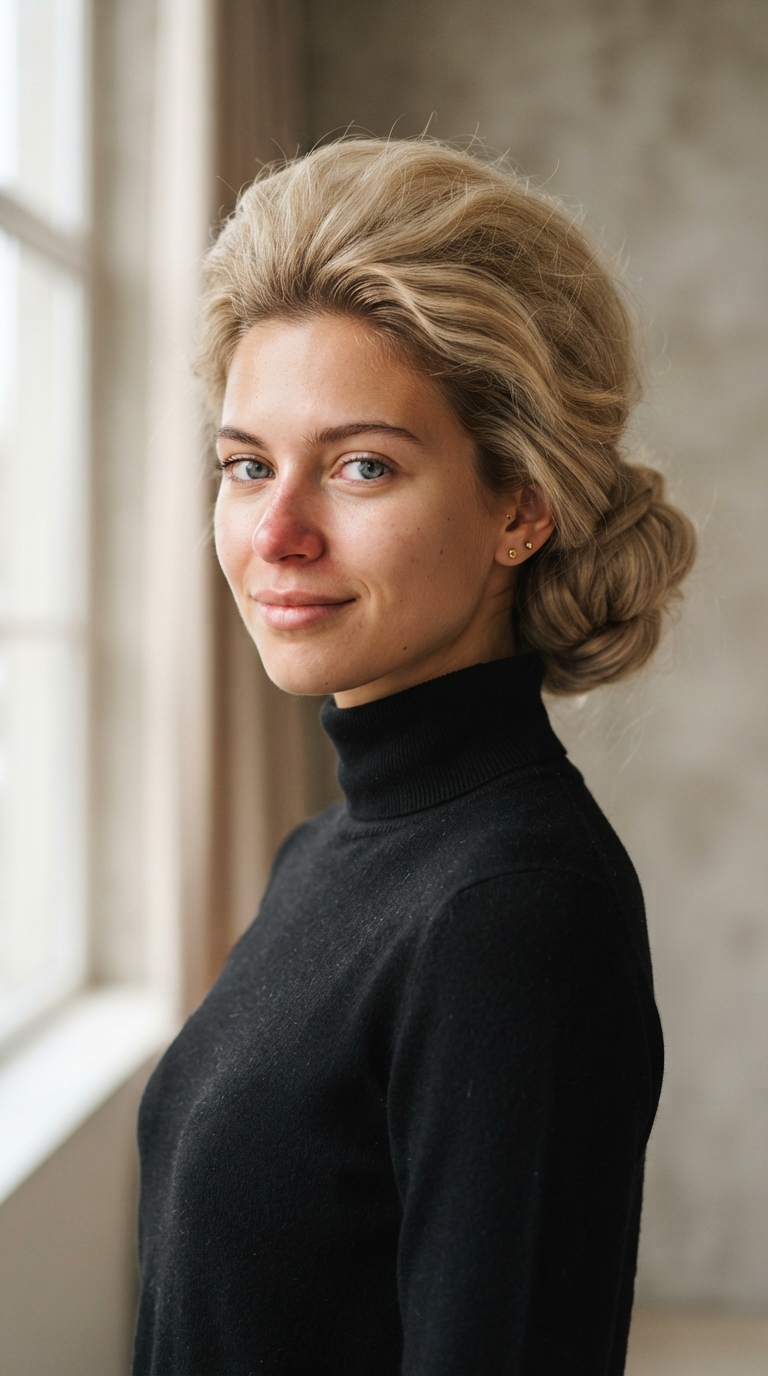
The bouffant pairs a teased crown with a smooth surface and lengths gathered low. It is a retro shape that keeps coming back because thick hair builds it honestly. Backcomb the crown section, then smooth the top layer over the teasing with a brush so the padding disappears. Gather everything into a low bun or roll and pin the join firmly. Bouffant versions pair the raised front with almost any back, such as a chignon, a loose low bun or a tucked roll. The height at the front balances the weight of thick hair at the back, which is why the proportions work. Save strong-hold spray for the very end. Spraying between steps makes the teasing gummy and the surface dull.
Read across all 20 styles and the same three principles keep repeating. Split the weight. Anchor in sections. And give dry hair grip before you start. That means texturizing spray on dry hair, pins placed in crosses, elastics doubled on anything heavy, and braids or twists doing the structural work wherever the hair is longest. Thick hair does not need to be fought into an updo. It needs to be spread out. Once it is, its fullness becomes the reason the style looks better on you than on anyone else.
One practical note before you begin. Buy more pins than the tutorial says, in the longest size, and match them to your hair colour. A thick-hair updo usually needs two to three times the hardware of the same style on fine hair. Running out of pins halfway through is how good styles end up rescued by a claw clip. Keep a small kit where you get ready, with pins, two strong elastics, a scrunchie and texture spray. With that kit in place, every style on this list stays within reach.
Frequently Asked Questions
What is the easiest updo for thick hair beginners?
Start with the claw clip updo or the pineapple bun, because neither one asks for pinning skill. The claw clip version works if you buy a large, strong clip and twist the hair up before clamping, so the clip holds a real structure and not a loose handful. The pineapple needs only a satin scrunchie and gravity. After those two, the textured mid-placement bun is the first pinned style worth learning. Spray for grip, twist loosely and pin in two directions. Learn that one bun well and most styles on this list become small variations of skills you already have.
Why do updos fall out of thick hair so fast?
Usually leverage, not pins. A single elastic or one row of pins at one point carries the whole head's weight, and thick hair is heavy enough to tilt, slide and work hardware loose within hours. The fixes are structural. Build the style in two or three sections. Anchor the base first, a ponytail before a bun, braids before a knot. Place pins in crossed pairs, so each pin locks against another. Add grip with texturizing spray before you start, because pins slide out of clean, silky hair. If an updo fell by noon, it almost always needed one more anchor point, not more hairspray.
How many bobby pins does thick hair actually need?
Plan on two to three times the count a tutorial shows. A simple bun on thick hair usually takes 8 to 12 long pins placed in crosses. A French twist or a braided style can take 15 to 20, and formal styles built by stylists often use even more, hidden in sections. For the structural work, use the longest pins you can find. Look for the 3-inch size sold as hair pins or roller pins, not standard bobby pins. Keep bobby pins for finishing and flyaways. Match the pin colour to your hair, so a visible pin does not spoil the line.
Are updos damaging for thick hair?
They can be, if you wear the same tight style in the same place every day. Constant tension at one point stresses your hairline and the line where the band sits. Rotate your styles instead. Wear a high pony one day, a low braided bun the next and a claw clip in between. Use snag-free elastics or scrunchies rather than thin bands with metal joins. Take styles down gently instead of dragging the elastic out, and never sleep in a pinned updo. Worn in rotation and at a sensible tightness, updos are actually protective. Hair that is up is hair that is not being rubbed, tangled or heat styled.
What products help thick hair hold an updo?
Three kinds of product do nearly all the work. A texturizing spray on dry hair before styling adds the grip that stops pins sliding, and it is the product stylists name most often for thick hair updos. A pomade or control paste smooths flyaways and edges on sleek styles without stiffness. A finishing hairspray locks the surface at the end, and a shine version suits polished styles best. Beyond the products, the hardware matters just as much. Strong elastics, long pins and a satin scrunchie will do more for your updo than a shelf of extra styling creams.