20 Layered Haircuts for Thin Hair That Look Fuller

Thin hair looks fuller with a few long layers, not a lot of short ones. The best cuts keep a blunt, point-cut edge at the ends, so the hair keeps its weight. Layers start at mid-shaft or below the cheekbones, and the shortest face piece stays at the chin or lower. Pixies and a stacked bob are the exceptions, because short layers at the crown or nape give those shapes lift. Each cut below follows that rule, and each one gives you the words to use in the chair.
Many women with thin hair fear layers, and that fear makes sense. Short, choppy layers can take weight out of the ends and leave them looking see-through. A cut that works for thin hair does the opposite. It keeps the length strong, adds just a few layers where movement is needed, and lets the ends stay full. The stylist should point-cut the edge, not use a razor or heavy thinning shears, because those tools strip weight that thin hair cannot spare.
The cuts below cover long hair, lobs, bobs and pixies. Each one says who it suits, where the layers sit, and how often to trim it. Most bobs and longer cuts need a trim every 6 to 8 weeks. Long styles often run a full 8 weeks. Pixies need a trim every 4 to 6 weeks, and the angled bob needs one every 5 to 6 weeks. Styles with a fringe need a fringe trim every 3 to 4 weeks, plus the main trim.
1. Soft Waves

Soft waves use light layers that run from mid-shaft to the ends, so the hair moves without losing weight at the bottom. The waves sit soft around the face and through the length, which helps thin hair look less flat. This cut suits thin, wavy hair that falls limp when it is cut all one length. Ask for "light, soft layers from mid-shaft down, with a blunt point-cut edge so my ends stay full." Keep the waves loose with a large barrel or by braiding damp hair overnight, and trim it every 8 weeks.
2. Flippy Layers

Flippy layers are long layers with face-framing pieces, and the ends curl in different directions for bounce. The layers stay long, so the hair keeps its density while the face pieces add shape. This cut suits fine hair that tends to hang straight and flat, and it suits women who want movement without a short cut. Ask for "long flippy layers with face-framing pieces that sit at my chin or lower." Dry it with a round brush and flip the ends out or in, and trim it every 8 weeks.
3. Face Frame

A face frame cut keeps the full length and adds just one tier of layers around the face. The rest of the hair stays long, so no weight is taken from the back or the ends. This cut suits long, thin hair that looks limp and needs shape at the front without a big change. Ask for "one tier of face-framing layers only, and keep all my length." Style the front pieces with a soft bend away from the face, and trim it every 8 weeks.
4. Banged Blowout

A banged blowout is a smooth, long blowout with light layers toward the front. The front layers give the hair movement, while the long back keeps the cut full. This cut suits long, thin hair worn smooth, and it suits women who like a polished finish that still moves. Ask for "a smooth long blowout with light layers toward the front only." Blow dry it smooth with a large round brush, and trim it every 8 weeks.
5. Windswept Inches

Windswept inches keep the hair well past the shoulders, with feathered pieces cut in from mid-shaft down. The feathered pieces stop long, thin hair from looking stringy at the ends. This cut suits long, thin hair that tends to go limp and thin out toward the bottom. Ask for "feathered layers from mid-shaft down on my long length, with a blunt edge." Let it air dry with a light wave spray for a windswept finish, and trim it every 8 weeks.
6. Long and Light

Long and light layers give long, thin hair soft dimension, and they help highlights read better through the length. The layers stay long and light, so the ends do not thin out. This cut suits long, thin hair, and it suits women who want a change that does not cost them length. Ask for "long, light layers through my length, with a blunt point-cut edge." Dry it smooth or with a soft wave, and trim it every 8 weeks.
7. Ghost Layers

Ghost layers are blended layers that sit under a longer top layer, so the cut looks almost one length from the outside. The shorter layers underneath give movement, while the top layer keeps the hair looking full. This cut suits thin hair, and it works best on longer cuts where hidden layers can do their work out of sight. Ask for "ghost layers underneath, blended and not choppy, with a solid perimeter." Dry it as normal, and the hidden layers will add movement on their own. Trim it every 6 to 8 weeks.
8. Bouncy Lob

A bouncy lob sits at shoulder length and uses layers that add movement and fullness. The shoulder length keeps the hair from dragging down, so it bounces more than a long cut. This cut suits thin hair that needs body and bounce, and it suits women who want a mid-length cut that is easy to style. Ask for "a shoulder-length lob with soft layers for bounce, and a blunt edge." Dry it with a round brush for lift at the roots, and trim it every 6 to 8 weeks.
9. Layered Lob

A layered lob pairs a shoulder-length cut with soft layers that flip in toward the face. The soft layers add shape without taking weight from the ends. This cut suits thin hair, and it helps women who want to cover sparseness along the hairline with soft face pieces. Ask for "a layered lob with soft layers that flip toward my face." Dry the face pieces inward with a brush, and trim it every 6 to 8 weeks.
10. Light Layer Lob

A light layer lob is a shoulder-grazing bob with ghost layers over a solid perimeter. The layers stay hidden, so the outline looks clean while the hair still moves. This cut suits thin hair that wants a lob with a little more life than a one-length cut. Ask for "a light layer lob with ghost layers over a solid perimeter." Smooth it with a brush or let it air dry, and trim it every 6 to 8 weeks.
11. Face-Framing Layers

Face-framing layers are light layers that sit only around the face, and they are far lighter than a heavy, stacked cut. The layers give thin hair natural texture and movement without a big chop. This cut suits thin hair that wants shape at the front, and it suits most lengths because the back stays untouched. Ask for "light face-framing layers only, nothing heavy through the back." Bend the front pieces softly away from the face, and trim it every 6 to 8 weeks.
12. Curtain Bangs

Curtain bangs are longer bangs that part in the middle and frame the face on both sides. The bangs add volume at the front, and they can be worn up, down or half up. This cut suits thin hair, and it can help cover thinning areas along the scalp at the front. Ask for "long curtain bangs that sit at my cheekbones or lower, with long layers through the rest." Blow the bangs away from the face, and trim the bangs every 3 to 4 weeks and the main cut every 6 to 8 weeks.
13. Split Fringe

A split fringe is a curtain-style fringe that splits in the middle and frames the face without covering it. The fringe works as a layering choice on long or short hair, and it adds shape at the front. This cut suits thin hair worn long or short, and it suits women who want a fringe that grows out well. Ask for "a split fringe that sits at my cheekbones or lower, not short across my forehead." Part it in the middle and sweep each side back, and trim the fringe every 3 to 4 weeks and the main cut every 6 to 8 weeks.
14. Textured Bob

A textured bob adds a light texture to a bob, with ends that flip slightly instead of sitting dead straight. The texture stays subtle, so the bob still looks full at the ends. This cut suits thin hair worn as a bob, and it suits women who want a bob with a little more life. Ask for "a bob with subtle texture at the ends only, and a blunt edge." Dry it smooth and flip the ends out lightly, and trim it every 6 to 8 weeks.
15. Graduated Bob
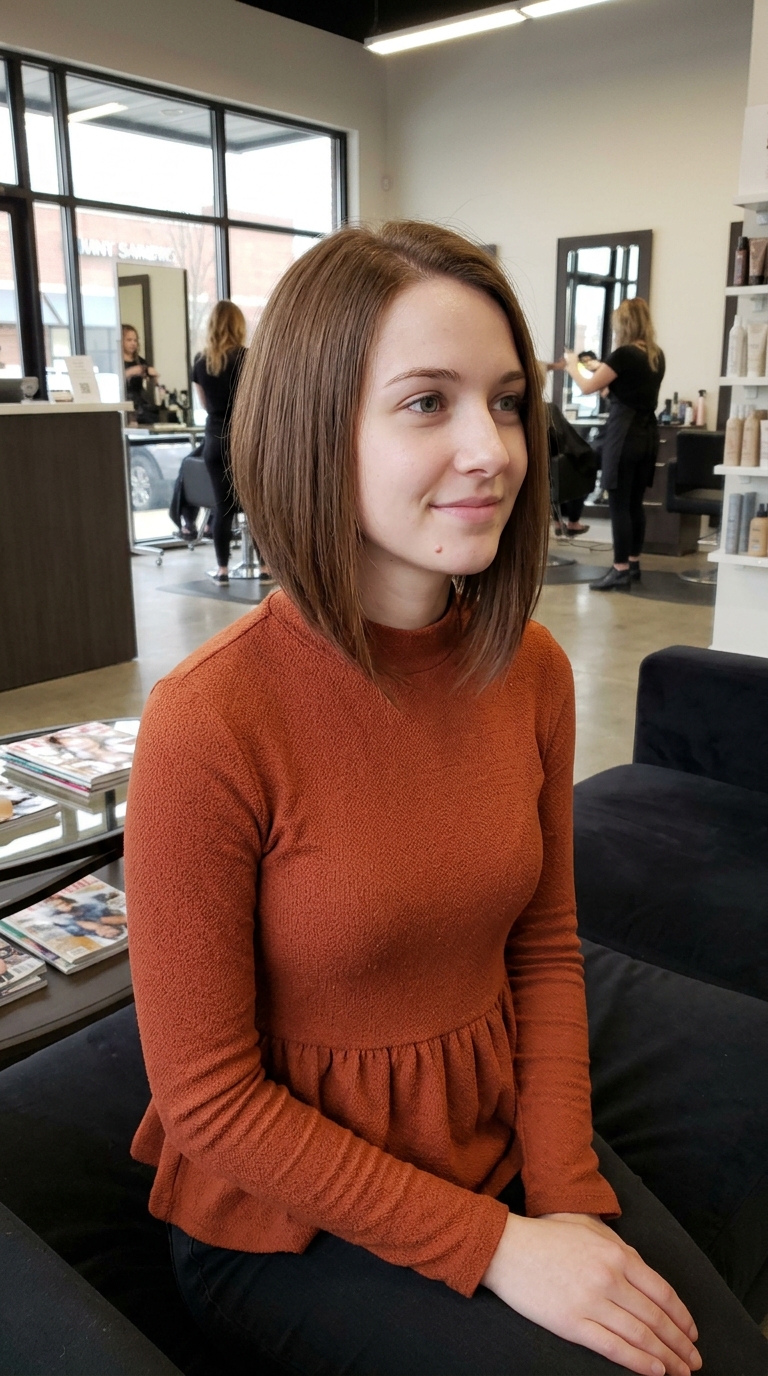
A graduated bob is an angled bob or lob with longer pieces in front and a shorter back. The longer front keeps weight where the eye sees it, while the shorter back gives the shape lift. This is one of the set exceptions, because the short back layers give lift in the same way a stacked bob does. This cut suits thin, straight hair, and it suits women who want an angled shape that is easy to comb through. Ask for "a graduated bob, longer in front and shorter at the back, with a blunt edge." Smooth the front pieces forward, and trim it every 5 to 6 weeks.
16. Bixie Cut

A bixie sits between a pixie and a bob, with shorter layers that keep the shape light and airy. The layers add movement, while the length stays longer than a pixie. This cut suits thin hair, and it suits women with natural texture who want a short cut that still moves. Ask for "a bixie, longer than a pixie, with short layers for movement and a soft edge." Dry it with your fingers for lift at the roots, and trim it every 4 to 6 weeks.
17. Piecey Pixie

A piecey pixie is a short pixie with layers cut in to lift a crown that looks less than full. The layers sit through the short crown, so the top has height instead of lying flat. This cut suits thin hair and a crown that needs lift, and it suits women who want a bold short shape. Ask for "a piecey pixie with layers through the crown for lift." Use a pea-sized amount of light wax to piece out the top, and trim it every 4 to 6 weeks.
18. Straight Pixie

A straight pixie uses layers to stop a short, straight cut from looking flat and helmet-like. Curls add volume on their own, but straight hair needs those layers for shape. This cut suits straight, thin hair worn short, and it suits women who want a clean pixie with movement. Ask for "a straight pixie with layers for shape, not a one-length pixie." Dry it with your fingers and sweep the top to one side, and trim it every 4 to 6 weeks.
19. Textured Pixie Cut
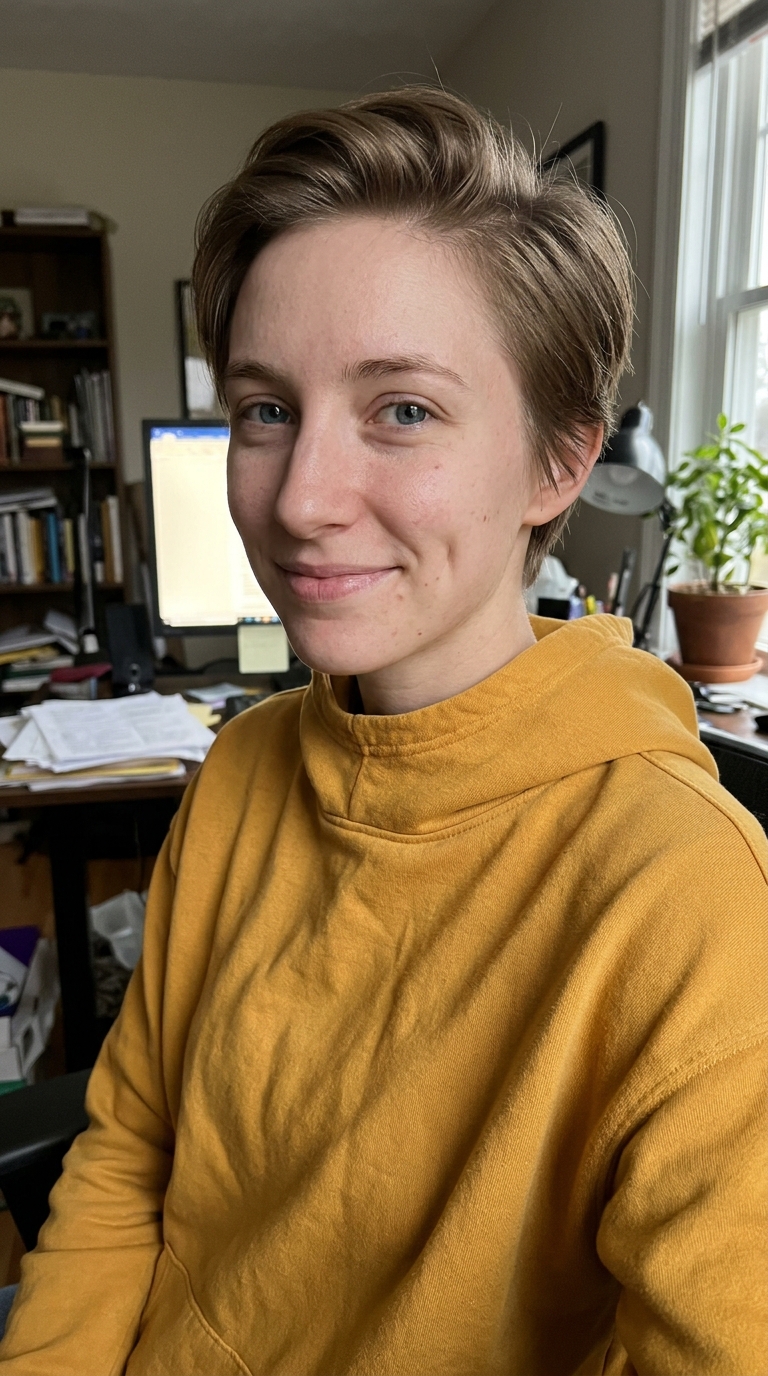
A textured pixie is worn pushed back and swooped to the side, so the front gives instant volume. The hair at the top covers sparse spots along the scalp, which helps thin hair look fuller. This cut suits fine hair worn short, and it suits women who want top volume without a lot of styling. Ask for "a textured pixie, pushed back and swooped to the side." Push the front back, swoop it to one side, and leave the rest alone. Trim it every 4 to 6 weeks.
20. Sleek Layers

Sleek layers use longer layers with soft bangs and straight strands set for a smooth, polished look. The strands stay glossy and calm, never tousled, and the layers add just enough movement. This cut suits thin, straight hair, and it suits women who want a smooth everyday cut or a polished look for work. Ask for "longer sleek layers with soft bangs, kept smooth and straight." Dry it smooth with a brush, and trim it every 6 to 8 weeks.
Thin hair does best when the cut keeps its weight. A few long layers, a blunt point-cut edge, and a trim on time will do more than a cut with many short layers. Pixies and the graduated bob earn their short layers because they need lift, but the rest of the cuts here keep their layers long and few. That pattern is why each cut above looks fuller, even though the hair itself has not changed.
Heat needs care on thin hair, because fine strands dry out fast. Keep a hot tool at about 150C or 300F for fine or bleached hair, and use it only on hair that is fully dry. The higher range of 180C to 200C, or 355F to 390F, is for coarse hair only, not for thin hair. A lower heat setting, a heat protectant, and a fully dry start will keep the ends looking full for longer between trims.
Frequently Asked Questions
Are layers good for thin hair?
Yes, but only the right kind of layers. A few long layers add movement and shape without taking weight from the ends. Short, choppy layers, razors and heavy thinning shears strip weight and can make thin hair look thinner. The safest choice is long layers from mid-shaft down, over a blunt point-cut edge, with trims every 6 to 8 weeks for most cuts.
How many layers should thin hair have?
Thin hair needs only a few layers, and they should sit where movement is wanted. One tier around the face, or a few long layers through the length, is often enough. Ghost layers work well because they sit under a longer top layer and add movement out of sight. If the ends start to look see-through, the cut has too many layers or the layers are too short.
How often should thin hair be trimmed?
Most bobs and longer cuts need a trim every 6 to 8 weeks, and long styles often run a full 8 weeks. Pixies need a trim every 4 to 6 weeks, because a short shape loses its form fast. The graduated bob needs one every 5 to 6 weeks. Fringe styles need a fringe trim every 3 to 4 weeks, plus the main trim, because a fringe loses its shape first.
What should I ask my stylist to avoid?
Ask the stylist to avoid razors, heavy thinning shears, and short choppy layers. Those tools and cuts take weight out of thin hair and leave the ends thin. Ask for point-cutting instead, which softens the edge without removing bulk. Also avoid a V-shaped back hem, because a pointed back makes thin ends look even thinner.
Can thin hair wear bangs?
Yes, if the bangs stay long enough. Curtain bangs and a split fringe work well when they sit at the cheekbones or lower, because they frame the face without taking much weight. Short, heavy bangs can make thin hair look sparse at the front. A long fringe grows out well, and it needs a trim every 3 to 4 weeks to keep its shape.