20 Layered Haircuts for Thick Hair That Remove Bulk

A layered haircut works on thick hair when the weight comes out from inside the hair, not off the surface. The stylist cuts shorter pieces under the top layer and through the mid-lengths, where thick hair holds most of its bulk. The outer shape and the length stay in place, so the hair still looks full but feels much lighter. Done this way, layers stop thick hair puffing out into a triangle and give it movement instead. Long layers, a V cut, a textured lob and a curly shag all use this same idea at different lengths.
Thick hair has a lot of strands, and those strands collect weight in the same spots. Bulk builds up at the nape, under the top layer and through the ends. When all that weight sits in one place, the hair pushes out at the bottom and sits flat on top. Stylists call that wide bottom shape the triangle, and it is the main thing a good layered cut has to fix.
The 20 cuts below come from stylist guides for thick hair, and they run from long layers down to a short bixie. Each one says where the weight comes out, who it suits, and the exact words to use in the chair. One point runs through all of them. Thinning the ends hard or cutting the surface layers too short makes thick hair frizz and puff, so the safe cuts take the weight out from inside and keep the outline strong.
1. Long Layers with Feathered Ends

Long layers that start around the chin or the collarbone, with the ends feathered so the bottom of the hair feels light. The feathering takes weight out of the last few inches, which is where long thick hair drags the most. The fullness stays through the top and middle, so the hair keeps its body but falls in a soft cascade instead of one heavy sheet. It suits straight and wavy thick hair and anyone who wants to keep serious length. Ask for "long layers starting at my collarbone, with feathered ends, and keep my length." Build body at the roots when you dry it, because long layers can fall flat by midday if the roots stay damp. Trim every 8 weeks to keep the feathered ends clean.
2. V-Cut Layers
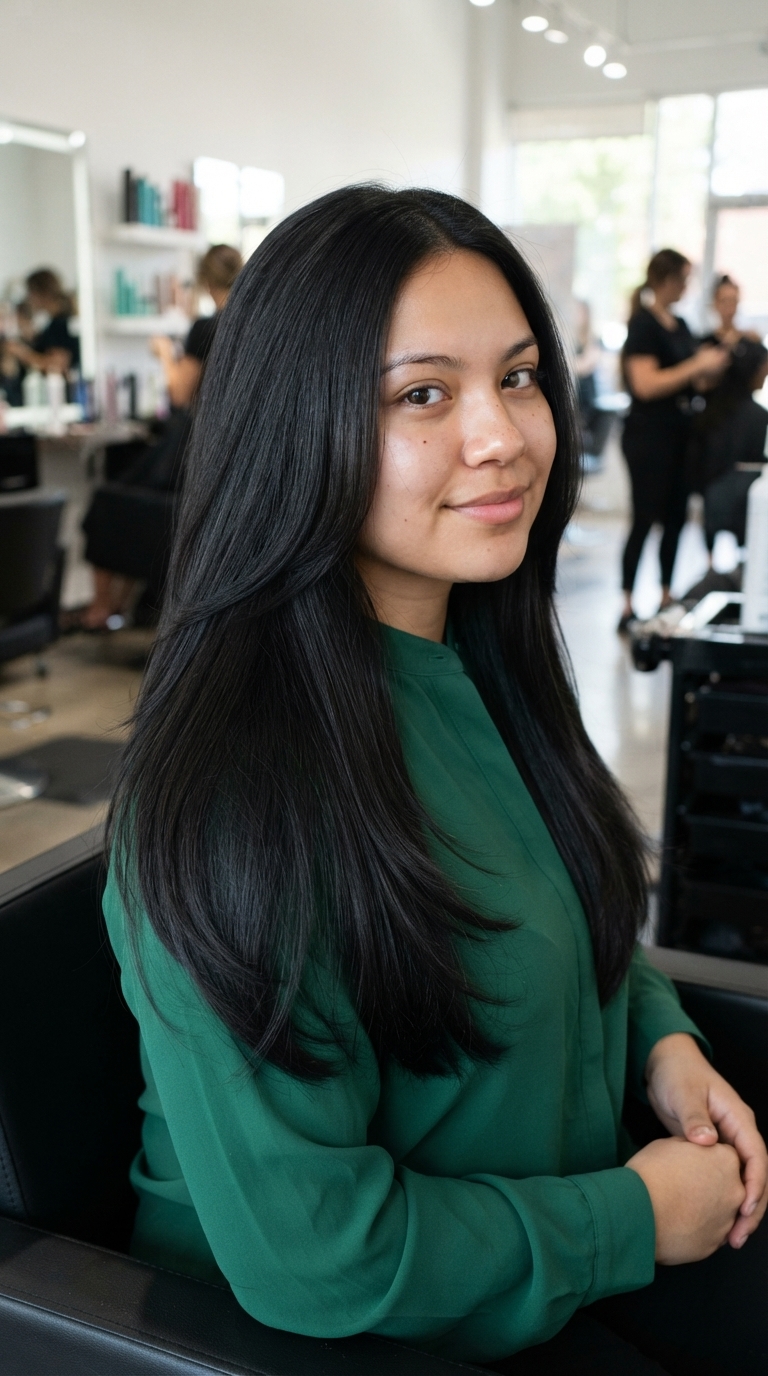
Layers cut at an angle so the back of the hair comes to a soft point, like the letter V. The angle pulls bulk out of the back and sides while the front keeps its length around the face. Because the longest point sits in the middle of the back, the hair shows off its length and still moves when you turn your head. It suits long, straight to wavy thick hair, and colour like balayage shows the V shape off well. Ask for "a V cut with long blended layers, length kept at the front." A few drops of oil through the mid-lengths and ends keep the point smooth and shiny. Trim every 8 weeks, because the V loses its shape as it grows.
3. U-Cut with Soft Layers
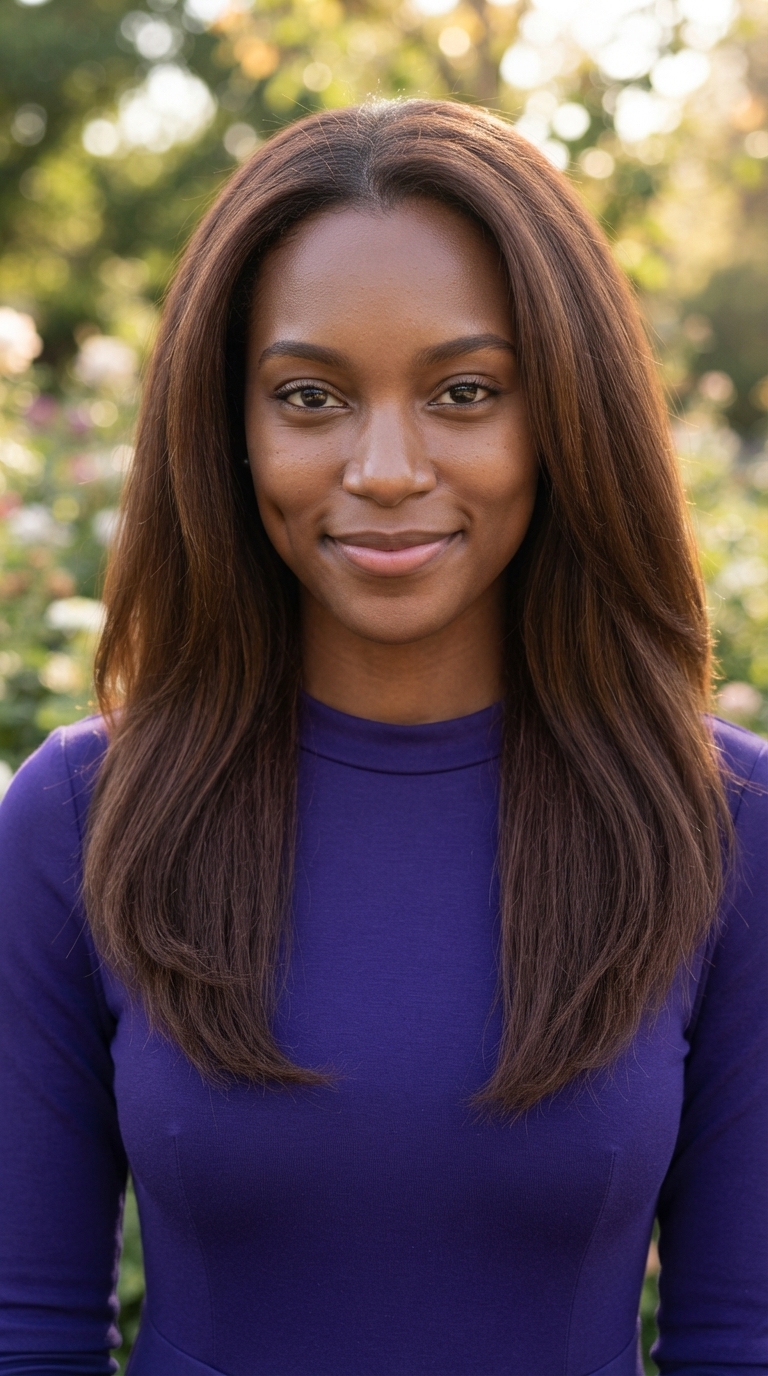
A gentler version of the V cut, where the back curves in a soft U shape and the layers blend in a smooth slope. The curve takes bulk out of the corners, which are the spots that make long thick hair look square and heavy. The rounded back keeps the hair looking full and balanced from every side. It suits straight, wavy and curly thick hair, and it is a safe first layered cut if you are nervous about losing fullness. Ask for "a U cut with soft blended layers and light face framing." Smooth a little product through the lengths before you dry it, so frizz does not break the rounded shape. Trim every 8 weeks.
4. Long Curly Layers

Long layers cut through the whole head of curls so the length stays but the ends stop bunching into one dense block. On curly hair, bulk gathers at the bottom, and layers spread that weight up through the hair so the curls can spring and separate. Soft face-framing pieces blend into the curl pattern at the front. It suits wavy and curly thick hair that feels heavy and wide at the ends. Ask for "long layers through my curls, cut dry, with soft layers around my face." Work a coin-sized amount of curl cream through damp hair section by section and scrunch upward, then air dry or diffuse on low. Heavy creams pull the curls down into a clump, so keep products light. Trim every 8 weeks.
5. Blended Internal Layers on Long Hair

The quietest cut on this list. The stylist cuts shorter layers underneath the top layer, inside the hair, so the surface still looks like one smooth length. Those hidden layers carry less weight, and the top hair falls closer to the head instead of puffing out. From the outside almost nothing changes, but the hair feels lighter and swings more. It suits long thick hair that looks too wide and anyone who wants less bulk with no visible change in style. Ask for "internal layers underneath to take the weight out, with my top layer and length left alone." Because the shape is hidden, it grows out softly. Trim every 8 weeks to keep the inside layers doing their job.
6. Long Shag with a Fringe

A shaggy, feathered cut that keeps the length but layers from the crown down, so the top has volume and the ends stay light and airy. The layering removes weight through the mid-lengths, which is what stops a long shag on thick hair turning into a heavy curtain. A curtain fringe finishes the front and breaks up the forehead. It suits wavy thick hair and anyone who likes a lived-in, 1970s feel. Ask for "a long shag, layers from the crown, light airy ends, and a curtain fringe." The fringe needs its own trim every 3 to 4 weeks to stay at cheek level, and the main cut needs a trim every 8 weeks.
7. Curly Shag

A shag built for curls, with layers placed through the whole cut so the curls stack and define instead of forming one heavy shape. The layers get gradually shorter toward the crown, which lifts the top and stops the bottom puffing into a pyramid. Soft layers or a light fringe around the face balance the volume at the front. It suits curly and wavy thick hair that sits wide and flat on top. Ask for "a curly shag with layers throughout, shorter toward the crown, cut dry." Smooth a coin-sized amount of curl cream over damp hair and scrunch upward, then air dry or diffuse on low for definition without crunch. Trim every 6 to 8 weeks.
8. Textured Lob
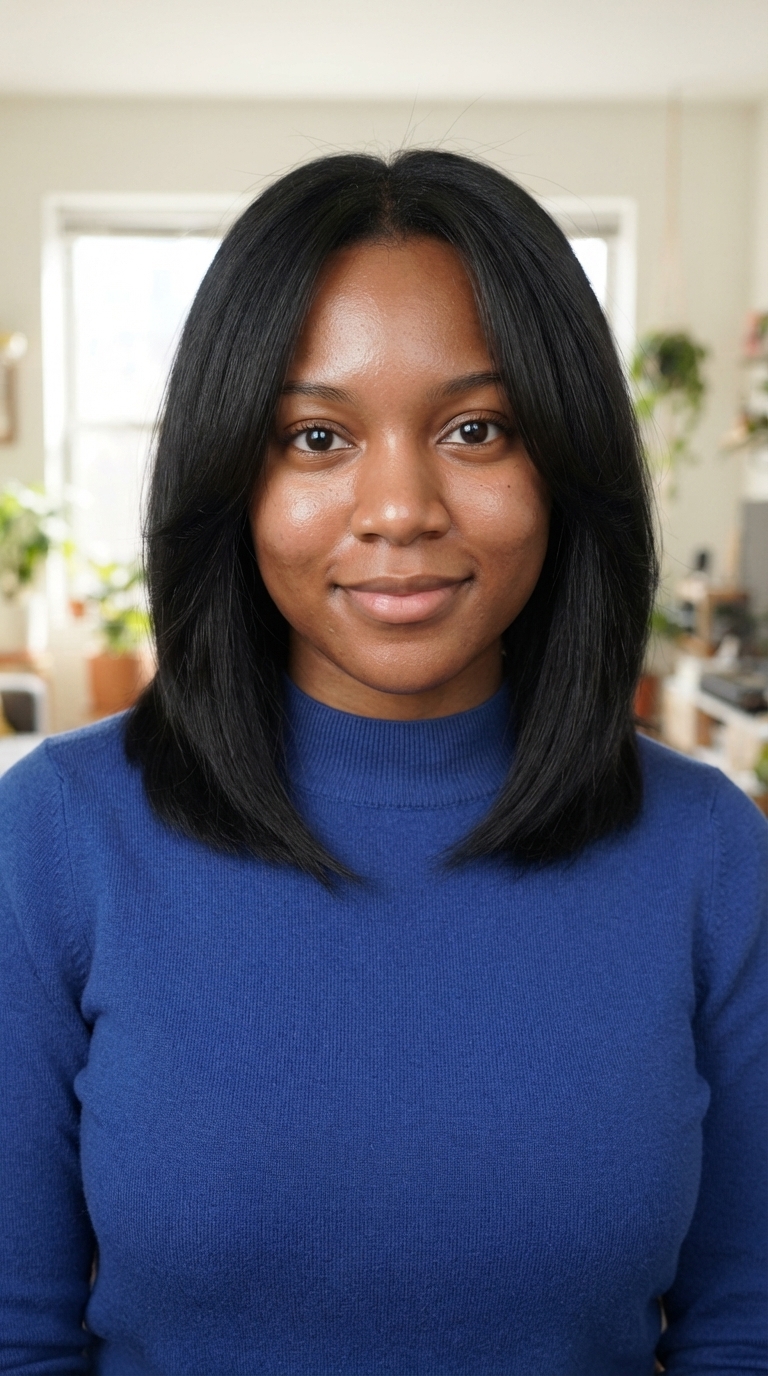
A long bob that falls just above the shoulders, with subtle long layers and a slight angle that tapers toward the front. The layers are kept minimal and long, so the cut keeps its clean line but loses the blocky weight a one-length lob has on thick hair. Face-framing pieces at the front soften the edge around the cheeks. It suits straight and wavy thick hair and gives a polished look that is easy to keep. Ask for "a textured lob just above my shoulders, with long subtle layers and light face framing." Wear it with a few loose waves and a little texture spray scrunched in, because dead straight can read flat on this cut. Trim every 6 to 8 weeks.
9. Disconnected Choppy Lob

A lob with jagged, uneven layers that do not blend into each other, cut on purpose to break up density. The chunky pieces stop thick hair puffing out as one solid mass and give the cut movement and edge. It keeps its natural body, so the hair still looks thick, just shaped. It suits thick hair that needs shape and definition, and it works air dried or blow dried. Ask for "a choppy lob with uneven layers to break up the bulk, kept relaxed." Because the edges are meant to look uneven, small grow-out does not spoil it. Trim every 6 to 8 weeks.
10. Shoulder-Length Cut with Face-Framing Layers

Shoulder-length hair with layers that start at the chin or just below and frame the face, while the back keeps only light layering at the ends. Keeping the back fuller holds the shape, and the front layers soften and contour the face. It is one of the most wearable cuts here because it works for work, weekends and updos. It suits straight and wavy thick hair at almost any age. Ask for "shoulder length with face-framing layers from my chin, and keep the fullness at the back." The front needs a smooth blow dry to sit right, so run a round brush through the framing pieces as you dry. Trim every 6 to 8 weeks.
11. Shoulder Layers with Curtain Bangs

Shoulder-length hair with soft layers at the back and curtain bangs that fall at the cheekbones or a little longer. The back layers hold volume in check without adding bulk, and the bangs split in the middle and sweep out, which softens a strong forehead. The cut gives movement without heavy layering through the whole head. It suits straight to wavy thick hair. Ask for "shoulder length, soft layers at the back, and curtain bangs at my cheekbones." Curtain bangs on thick hair need real lift at the roots or they fall flat, so use a little volume spray at the roots and dry the bangs lifting with your fingers or a round brush. Trim the bangs every 3 to 4 weeks and the main cut every 6 to 8 weeks.
12. Medium Layers with Wispy Bangs

A medium-length cut with long layers starting around chin level and a wispy, see-through fringe. The long layers create flow and take out bulk through the lower half, where medium thick hair gets heavy. The wispy bangs blend into the layers instead of sitting as one thick block, which matters because a heavy blunt fringe can look puffy on thick hair. It suits straight, wavy and curly thick hair. Ask for "long layers from my chin and wispy bangs that blend into the sides." Dry the hair in sections and let the bangs cool in a roller if you want them to keep a soft feathered shape. Trim the fringe every 3 to 4 weeks and the layers every 8 weeks.
13. Textured Shoulder-Length Wolf Cut

A wolf cut at shoulder length, with lots of feathered layers in a relaxed, lived-in shape. The heavy layering up top and through the sides removes bulk without losing volume, so dense hair stops sitting flat and heavy around the face. The result has bounce and an airy finish even though the hair itself is thick. It suits medium-length thick hair, straight or wavy, and anyone who wants a modern, undone look. Ask for "a shoulder-length wolf cut with feathered layers, light around my face." A little curl cream or sea salt spray worked through damp hair brings the texture out, and it dries well with a diffuser at the roots. Trim every 6 to 8 weeks.
14. Choppy Medium Shag

A medium shag with shaggy layers all over and a rougher, piecey finish than the long shag. The choppy cutting takes out the frazzled, heavy ends and gives thick hair a pattern it can fall into, instead of one solid shape. It is a good rescue cut for hair that feels damaged from heat or colour, because the worst ends come off in the layering. It suits wavy thick hair and anyone who likes an undone finish. Ask for "a choppy medium shag with layers throughout and piecey ends." It is meant to look lived-in, so it forgives grow-out better than neat cuts. Trim every 6 to 8 weeks.
15. Shaggy Bob

A short bob that lands between the chin and the jaw, with tousled choppy layers and soft face-framing pieces at the cheeks. The choppy layers keep the volume and texture of thick hair but spread it out, so the bob does not sit like a solid bell shape. Light blended layers through the back stop the rear puffing out. It suits wavy or straight thick hair and gives a relaxed, edgy finish. Ask for "a shaggy bob between my chin and jaw, with choppy layers and soft pieces at my cheeks." Texture spray is what makes this cut work, so mist it through dry hair from about 10 to 12 inches away and scrunch for a piecey finish. Trim every 4 to 6 weeks, because short shapes lose their line fast.
16. Angled Layered Bob

A bob that is shorter at the back and longer at the front, with soft layers through the whole cut. The angle pulls weight out of the back, where thick bobs build up bulk, and the longer front keeps a sharp, sleek line that frames the face. The layers stop the shape looking boxy, which is the usual fear with short cuts on dense hair. It suits straight thick hair and anyone who wants a polished, shaped cut. Ask for "an angled bob, shorter at the back, with soft layers throughout." It sits best blow dried smooth with a round brush. Trim every 6 weeks to hold the angle.
17. Stacked Bob

A bob with short stacked layers built up at the back, getting slightly longer toward the front. The stacking does two jobs at once on thick hair. It removes bulk from the back of the head and builds a curved shape with volume at the crown, where you actually want it. The front stays smooth and frames the face. It suits thick hair that puffs out at the back and anyone who likes a neat, rounded silhouette. Ask for "a stacked bob with internal layers at the back and a smooth longer front." Short stacked shapes show grow-out quickly. Trim every 4 to 6 weeks.
18. Layered French Bob

A French bob that sits just below the chin, with gentle, light blended layering through it. Thick hair can puff outward at this length, and the soft layers give the hair movement so it does not sit stiff or severe. The shape stays relaxed and wearable instead of helmet-like, which is the risk with a blunt bob on thick hair. It suits straight and slightly wavy thick hair. Ask for "a French bob just below my chin, with light blended layers so it does not puff out." If your stylist suggests adding internal layers underneath, that helps this cut even more. Trim every 6 weeks.
19. Modern Bixie
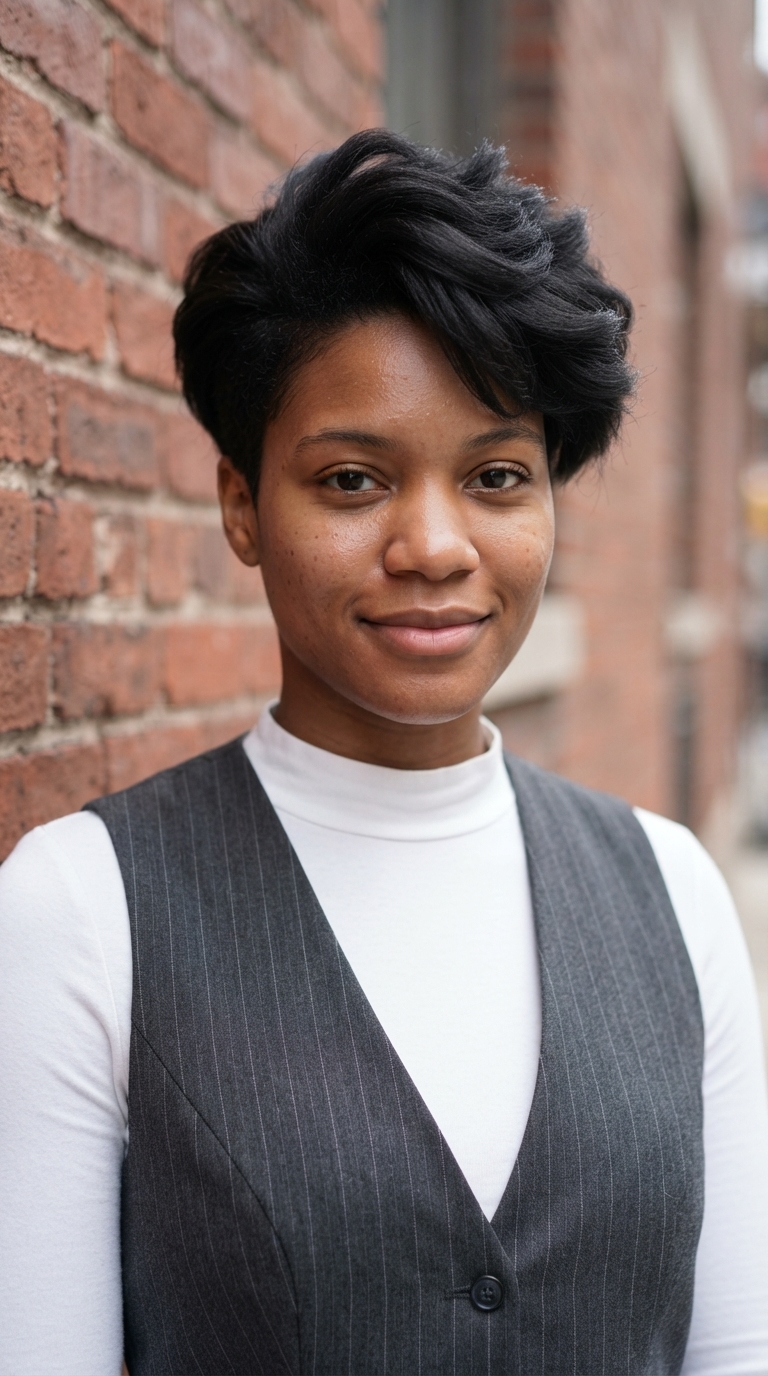
A mix of a pixie and a bob, with cropped sides and back and textured layers through the top. Internal layering is what makes it work on thick hair, because it balances the volume and gives a lighter feel without losing fullness where you want it. You keep some length on top to style, while the short sides take away the bulk around the ears and nape. It suits thick hair and anyone ready for a bold, modern short cut. Ask for "a bixie with cropped sides, textured layers on top, and internal layering to control the volume." Short cuts like this need regular shaping. Trim every 4 to 6 weeks.
20. Chin-Length Layered Bob

A bob that ends right at the chin, built from several angled layers that give it a feathery texture. The layers contrast with the neat, smooth edge of the bob, so the cut has movement without sharp outlines or a long front. On thick hair, those angled layers stop the chin-length shape swelling into a wide block at the jaw. It suits straight thick hair and strong jawlines. Ask for "a chin-length bob with angled layers and a feathery finish, edges kept neat." It is a precise cut, so it needs a tidy-up sooner than longer styles. Trim every 6 weeks.
One pattern runs through all 20 cuts. The weight always comes out from inside the hair, from underneath, or from the spots where bulk collects, like the nape, the back and the ends. The outer shape stays strong in every case. That is why these cuts still look thick in a good way. They just stop feeling heavy, and they do not puff out at the bottom the way a one-length cut does on dense hair.
Heat needs care on thick layered hair, because the layers expose more ends to the dryer and the iron. Always use a heat protectant before a blow dryer, a round brush, a diffuser, a flat iron or a wand. Blow dry and diffuse from damp, and use irons and wands only on hair that is fully dry. Keep the heat at about 300 degrees Fahrenheit for fine or bleached strands, and about 355 to 390 degrees for coarse hair. A drop of smoothing oil on the mid-lengths and ends tames frizz without weighing the layers down.
Frequently Asked Questions
Are layers good for thick hair?
Yes, when they are cut the right way. Strategic layering takes weight out from inside the hair and through the mid-lengths, so thick hair keeps its fullness but loses the heavy, wide feeling. The cuts that fail are the ones with aggressive thinning or very short surface layers. Those can add puff and frizz instead of removing bulk.
Can a stylist take too much weight out of thick hair?
Yes. If too much hair comes out, the ends turn thin and stringy and the shape loses its support. Thick hair needs its outline kept strong while the inside is lightened. A good check is the bottom edge of the hair. It should still look full and clean, not see-through. If your hair felt wispy after a cut, ask for internal layers only next time and no thinning shears on the ends.
How often should you trim a layered cut on thick hair?
Most layered cuts on thick hair need a trim every 6 to 8 weeks, because hair grows about half an inch a month. Long layers can stretch to 8 weeks and sometimes a little longer. Short bobs and bixies need shaping every 4 to 6 weeks. Fringes and curtain bangs grow out of place fastest, so they need a small trim every 3 to 4 weeks on their own.
Do layers work the same on straight, wavy and curly thick hair?
No. Straight thick hair shows every layer line, so the layers need to blend well. Wavy hair falls into layers easily and needs the least work. Curly thick hair should be cut dry, curl by curl, because curls shrink as they dry. A wet cut on curls often ends up shorter and wider than planned. The layer placement also changes, since curls need weight spread out so they do not form a triangle.
Which layered cut suits a round face with thick hair?
Longer cuts usually work best, because length draws the eye down. Long layers with face-framing pieces that start at the chin or below soften the cheeks without adding width at the sides. A V cut or long layers with feathered ends are both good picks. Short wide bobs and heavy volume at cheek level are the shapes to skip, because they make a round face look wider.