20 Layered Haircuts for Long Faces That Add Width

A layered haircut flatters a long face when the shortest layer lands between your cheekbones and your chin, because that is where a long face needs width. Layers placed there push the shape of the hair out sideways, right at the level the eye measures first. Keep some weight through the mid-lengths and ends as well, so the cut does not collapse flat against your cheeks. Height at the crown does the opposite of what you want. It adds vertical length your face does not need. Get the placement right and layers stop being a risk for long faces. They become the whole fix.
Most long-face advice stops at "add layers," and that is how people end up with feathery ends, a flat top half and a face that looks longer than before. The detail that matters is where the layering starts. Layers that begin at your cheekbone, jaw or chin build a horizontal line across the middle of your face, and horizontal lines are what make a face look shorter. Layers that only start near the ends do nothing for your face shape at all. They just thin out the bottom of your hair.
The 20 cuts below are the layered styles the long-face guides actually recommend, from a collarbone shoulder cut to a cheek-volume bixie. Each one says where its shortest layer sits, who it suits, and the exact words to use in the chair. That wording matters, because asking for "some layers" gets you whatever your stylist feels like that day. One warning runs through all of them. Never let the layers creep up toward the crown. The moment the volume moves to the top of your head, the width effect is gone.
1. Shoulder-Length Cut with Face-Framing Layers

This is the benchmark cut for a long face. It sits at shoulder length, and the face-framing layers start at the cheekbones or the jawline, so the width lands through the middle of your face. That starting point is the entire trick. Layers opening at cheek height make the sides of your hair stand out slightly instead of lying flat and vertical. The cut suits straight to wavy hair and most densities, because the framing pieces can be cut fine or chunky to match your hair. Style it with a soft bend or an outward flip at the ends, so the bottom edge lifts rather than pointing down. Ask for "face-framing layers starting at my cheekbones, keeping the length at my shoulders." Book a trim every 8 to 10 weeks to hold the layer position.
2. Butterfly Cut
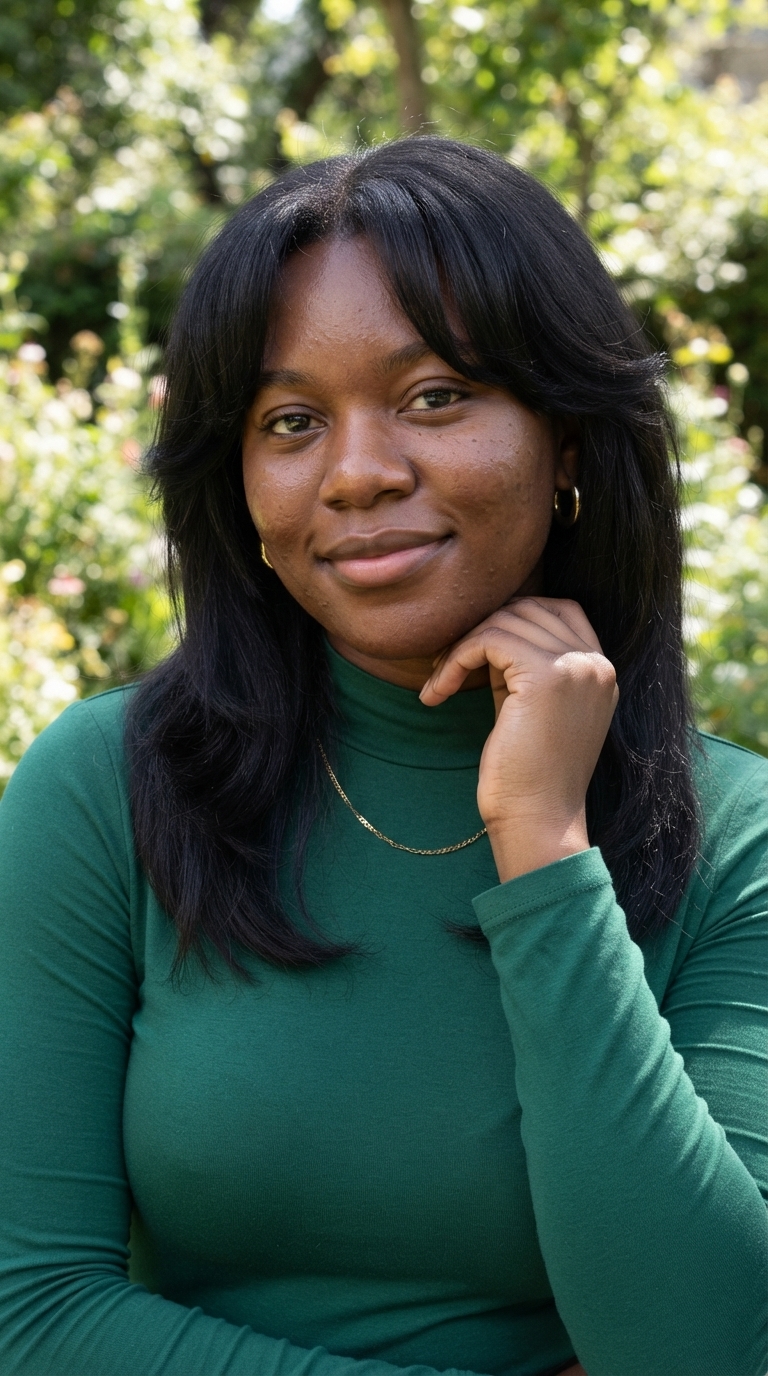
The butterfly cut uses two layer lengths working together. Short, cheek-lifting layers sit around your face, over much longer layers underneath, so you get the width of a short cut without giving up your length. The short layers do the face work. They open out at the cheeks and break up the long vertical line that a long face and long hair make together. Curtain bangs are the natural partner for this cut and widen the effect further. It suits medium to thick hair best. Very fine hair can look sparse in the short layer. Ask for "a butterfly cut, short layers framing my face at cheek level, long layers underneath, length kept." The short layers grow out of position fastest, so trim every 6 to 8 weeks.
3. Layered Shoulder Cut

This collarbone-grazing cut pairs face-framing layers with a middle part, and stylists make that part work on a long face by keeping the framing strong on both sides. Highlights woven through the layers add to the effect, because lighter pieces at cheek height read as extra width. This is the most wearable cut on the list. It suits most textures and densities and grows out gracefully. Keep the ends blunt rather than wispy, so the bottom edge stays a clear horizontal line. Ask for "a collarbone layered cut with face-framing layers from the chin down, and highlights through the front." Trim every 8 to 10 weeks, and expect the colour to want refreshing on the same visit.
4. Shaggy Shoulder Cut
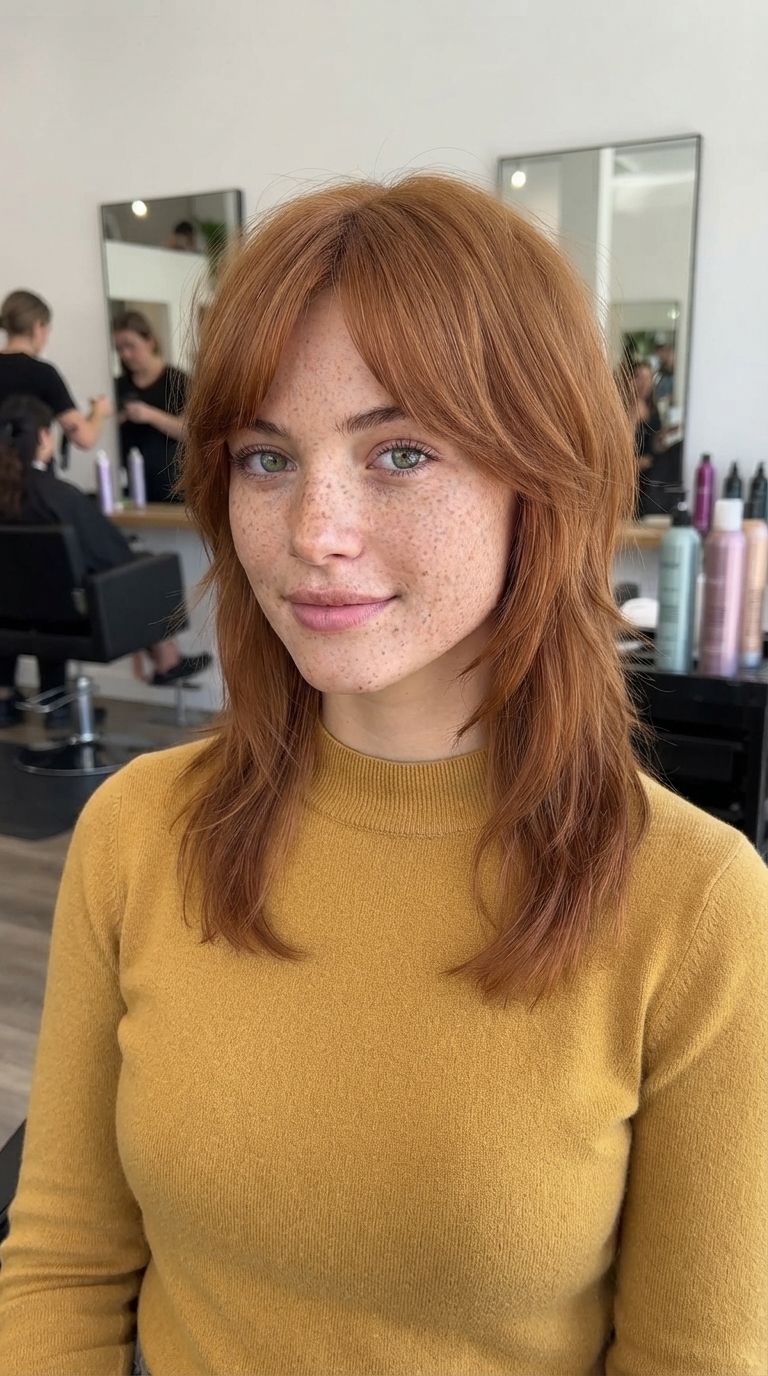
This layer-heavy shoulder cut has a side-swept front, and it is built for maximum volume and movement at the sides. The shaggy layering puts texture through the whole mid-section instead of just around your face, which makes it the strongest width-builder here for fine or flat hair. The side sweep matters too, because it drags the eye diagonally across your face rather than straight down it. It suits wavy hair naturally. Straight hair needs about five minutes of styling to get the same effect. Ask for "a shaggy shoulder cut with layers throughout and a side-swept front, nothing sleek on top." Shags forgive grow-out better than most cuts, so trims run every 8 to 12 weeks.
5. Choppy Lob with Curtain Bangs

A choppy long bob with soft waves and curtain bangs is a strong pick for thick hair that needs its weight spread sideways. The choppy layers stop the lob from reading as one solid block. The waves push what fullness there is out at chin and jaw height. Curtain bangs split your forehead and make it look shorter, which is half the battle on a long face. The cut sits at the collarbone, so the horizontal line stays low and wide. Ask for "a choppy lob with curtain bangs, layers through the ends, kept at collarbone length." Trim the cut every 8 weeks and the curtain bangs every 4 to 6 weeks, so they keep hitting your cheekbones.
6. Chin-Length Layered Bob

A bob that ends right at your jawline gives you the boldest horizontal line available. The whole bottom edge of your hair builds width through the lower third of your face and shows off your cheekbones. Layering keeps it from sitting like a helmet. The layers give the sides movement and stop the ends flipping under into a point. On curly hair, this cut wants a rounded shape with the layered volume pushed out at the sides, and it should be cut by someone who works with curls. It suits strong jawlines and anyone ready for a real change. Ask for "a chin-length layered bob, layered for side volume, no stacked height at the back." Short cuts lose their line quickly, so trim every 6 to 8 weeks.
7. Long Layers with Texture

Choose this cut if you want to keep serious length. The layers stay soft, blended and long, and you wear the hair with waves or loose curls, so the movement travels side to side at cheek height and pulls the eye outward. The styling does the widening more than the cut does, which makes this the safest entry point if you feel nervous about layering. It suits long hair of most densities. You can add blunt or curtain bangs whenever you want your forehead shortened as well. Ask for "long, blended layers with the shortest pieces at my chin, nothing taken off the length." Long layers hold their shape the longest of all, so trim every 10 to 12 weeks.
8. Long Curtain Bangs with Layers

Long curtain bangs are the gentler alternative to a full fringe. These reach the bottom of your cheeks or your chin, and they blend straight into long face layers. Placement is everything here. Curtain bangs that end higher, around your eyes, frame the top of your face and can make it look longer. Cheek-to-chin bangs build the horizontal line where it counts. Because the bangs melt into the layers, there is no hard edge anywhere, and the whole front reads as width. The cut suits straight and wavy hair, and it is the smallest change on this list. Ask for "long curtain bangs ending between my cheeks and chin, blended into face layers." The bangs need a trim every 4 to 6 weeks to stay at that level, while the layers only need one every 10 to 12.
9. Layered Long Curls with Wispy Bangs

This cut is built for natural curls worn at length. Light layers run through the curls, and wispy bangs blend into the face-framing pieces, so your curl pattern itself supplies the side volume. Curls are a natural ally for a long face because they expand sideways by default. The layers just need to stop them forming one long column. One technical rule matters a lot. Curly hair, and curly bangs in particular, should be cut dry, because curls shrink as they dry and a wet cut leaves the fringe far shorter than planned. Ask for "dry-cut layers through my curls, with wispy bangs blended into the face frame." Curly cuts grow out softly, so trims run every 10 to 12 weeks, with the bangs checked at 6.
10. Curly Shag

The shag is named again and again as one of the best cuts for oblong and long faces, and on curls its effect doubles. Choppy layers sit everywhere, and the curl pattern expands in every direction. The layers run through the sides of the crown and the mid-lengths rather than piling on top, and shorter pieces around your face keep the shape wide and round instead of long and narrow. It suits medium to thick curly hair. Very fine curls can separate too much with this much layering. Ask for "a curly shag, layers for width at the sides, fringe pieces at cheek level." Trim every 8 to 12 weeks, depending on how fast your curls grow.
11. Choppy Shag

The choppy shag is the modern shag on straight to wavy hair, with heavy layering, strong volume and firm face framing. You can add a soft fringe for extra impact. What separates it from the shaggy shoulder cut is how choppy and disconnected the layers are. The texture is the style, which makes it forgiving on thick hair and a real change for the better on flat hair. Keep the fringe at eye-to-cheek length rather than short, so it widens your face instead of sitting on it like a lid. Ask for "a choppy shag with heavy layers and face framing, volume at the sides, nothing smooth." It is meant to look lived-in, so trims stretch to every 8 to 12 weeks.
12. Medium Shag with Wispy Bangs

A medium-length shag with a wispy fringe adapts to more hair types than most cuts here. The fringe gives body to thin hair. On thick hair, the layers stop the length from looking heavy and dragged down. The wispy bangs are point-cut and see-through rather than solid, so they shorten your forehead without adding a heavy block across it. The shag layering handles the side width as usual. Ask for "a medium shag with wispy, point-cut bangs and layers starting at my cheekbones." Trim the cut every 8 to 10 weeks and the wispy fringe every 4 to 6 weeks.
13. Medium Choppy Cut for Fine Hair

These choppy layers are cut to give fine hair depth, and they are placed to fall at your cheekbones. The guides are clear on why that placement matters. Layers at cheekbone height are what make a long face look shorter and better shaped. Fine hair is where cut precision counts most. Too much layering and the ends disappear. Too little and the hair lies flat and vertical. Choppy, piece-y ends create the look of thickness at exactly cheek height. Ask for "choppy layers that fall at my cheekbones, ends kept piece-y, no length off the back." Fine hair shows grow-out sooner, so trim every 6 to 8 weeks.
14. Razored Long Bob

A razor cut gives a long bob feathered layers instead of clean steps, and that builds soft body all around your face. The finishing touch from stylists is extra feathered framing layers at the front. The razor makes them wispy and light, so the width reads as softness rather than bulk. This cut suits straight and slightly wavy hair of fine to medium density. Razors are usually kept off very curly or coarse hair, because they can frizz the ends. Ask for "a razored long bob with extra feathered layers framing my face." Razored ends thin out as they grow, so trim every 8 weeks to keep them clean.
15. Bob with Flipped Out Ends

This graduated bob starts its layering around mid-ear level, and you style the ends flipped outward. The guides describe it as working for expansion rather than elongation, which is the whole brief for a long face. The flip is not just decoration. Ends kicking out at jaw height widen the lowest part of your shape, and pairing the cut with a fringe makes an oblong face read closer to oval. It suits straight and wavy hair. You need a round brush, or a quick flick with straighteners, to style it. Ask for "a graduated layered bob from mid-ear down, ends styled flipped out, with a soft fringe." Trim every 6 to 8 weeks, because the flip only works at its exact length.
16. Cascading Cut with Layered Bangs
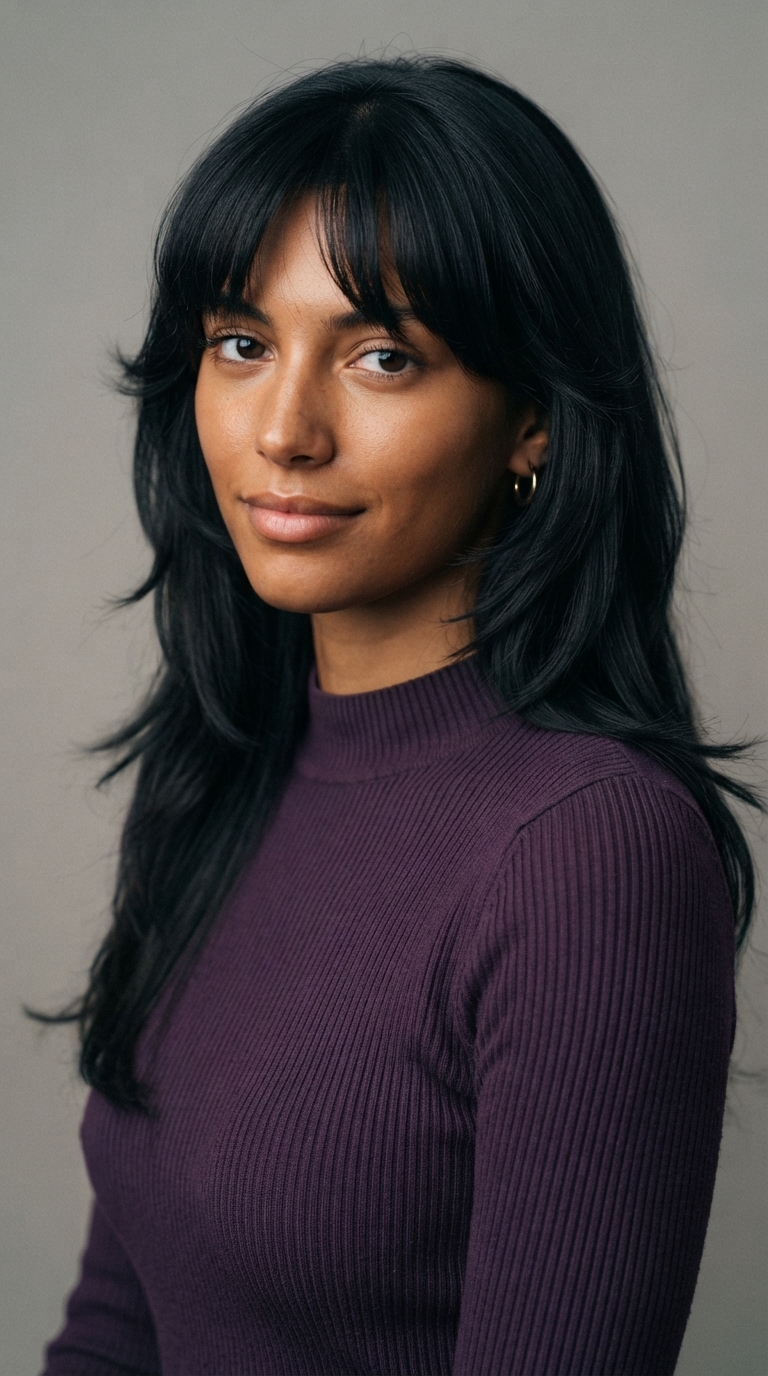
In this cut, the layers begin directly underneath a set of layered bangs and cascade down from there, so the framing starts at the top of your face and never really stops. The cut keeps a little more volume through the top layers than most long-face cuts allow. That works because the bangs break up your forehead, and the cascade pulls the eye down the sides in steps rather than one long drop. It suits medium to long hair and anyone who likes a lot of visible layering. Ask for "layered bangs with the layers cascading from underneath them, shortest face pieces at my cheeks." Trim the bangs every 4 to 6 weeks and the cascade itself every 8 to 10.
17. Medium Cut with Sliced Layers

This is a technique pick for medium-thick hair. The layers are cut by slicing, where your stylist holds the shears slightly open and slides them along the hair to carve bulk out from inside the section. Slicing removes weight without shortening the layer, so thick hair gets movement and a better face frame while keeping its density at the outline. The layers fall flat where they should and swing at the ends, instead of giving you the shelf effect that thick layered hair can get. Ask for "sliced layers to remove bulk through the mid-lengths, framing starting at my chin." Trim every 8 to 10 weeks.
18. Wavy Centre-Parted Bob

This tousled, wavy bob with a centre part is recommended for oblong faces on the thinner side, where the waves and a little highlight do the widening. Tousled waves are horizontal movement by nature, because every bend pushes the shape of your hair outward. Subtle highlights catch the light at the widest points. The centre part works here because the wave volume on both sides balances it. On flat, straight hair, the same part would drag the face down. The cut suits fine to medium wavy hair, or straight hair you are willing to wave each day. Ask for "a wavy bob with soft layers and subtle highlights, volume at the sides." Trim every 6 to 8 weeks to keep the bob at its widening length.
19. Side-Parted Layered Razor Cut

Long razor layers worn in a deep side part drape and bounce instead of hanging in one long sheet. The deep side part does quiet work here. It draws a diagonal line across the top of your face, which breaks the vertical in a way a centre part on long hair cannot. The razor layers give the lengths movement, so your hair reads wide and alive rather than long and still. Ask for "razor layers through my long hair, shortest face pieces at the chin, styled with a deep side part." Trim every 8 to 10 weeks.
20. Bixie with Long Side Bangs

The bixie is a bob and pixie hybrid, with heavy layering that builds volume around your cheeks and ears, plus long side-swept bangs. It is the short cut that widens instead of lengthening. The rule for bixies on long faces is to keep length and weight through the sides of the crown and around the ears. Avoid undercuts, and avoid height piled on top, because both undo the effect. This cut makes thick hair feel bouncy instead of heavy, it sits off your neck, and it is one of the easiest cuts here to look after day to day. Ask for "a bixie with long side bangs, volume kept around my cheeks and ears, no height on top." Short cuts need regular upkeep, so trim every 6 to 8 weeks.
Read the list again and one pattern repeats in every cut. The action is at the sides. The shortest layers sit between cheekbone and chin, the volume stays at cheek, jaw and collarbone level, fringes break up the forehead, and nothing adds height at the crown. A long face is not short of length anywhere. The haircut has only one job, and that is to move where the eye finds width.
One practical last word. Bring your stylist a photo if you like, but say the placement out loud anyway, because photos get interpreted and placements do not. "Shortest layer at my cheekbones" is an instruction. A screenshot is a suggestion. And if you wear a fringe, put its trims in your diary when you book the main cut. A fringe that has grown past your cheekbones quietly stops doing its job, and most people blame the haircut instead of the calendar.
Frequently Asked Questions
Where should layers start on a long face?
Between your cheekbones and your chin. That is the placement every long-face guide agrees on. Layers starting there build a horizontal line across the middle of your face, which makes it look shorter and adds the width a long face lacks. Layers that start lower, near the ends, only thin out the bottom of your hair and do nothing for your face shape. Layers that creep higher, toward the crown, are worse than useless because they add height, and height makes a long face read longer. Tell your stylist the exact starting point instead of just asking for layers.
Do layers make a long face look longer?
Only badly placed ones. Long layers that run straight down past your face, with no shorter pieces around your cheeks and no fringe, can drag a long face down. That is why one-length long hair is the style the guides warn against. Layers cut for width behave the opposite way. They use short pieces at cheek and jaw level, texture and wave at the sides, and weight kept off the crown. The same word, layers, describes both cuts, which is why the placement instruction matters more than the request for layers itself.
What bangs suit a long face best?
Bangs are often called a long face's best friend because they shorten the forehead. A useful guide is that your fringe should take up roughly a third of your face's length. Curtain bangs work when they are long, ending at the bottom of your cheeks or your chin, and blended into face layers. Blunt bangs shorten a forehead fastest, but they look softer when they are point-cut rather than cut in one hard line. Wispy and side-swept bangs are the low-commitment options. Whatever style you choose, plan for fringe trims every 3 to 6 weeks, far more often than the main cut.
How often do layered cuts need trimming?
It depends on the length of the cut more than the layering. Short layered cuts, such as bobs and bixies and chin-length styles, hold their widening shape for about 6 to 8 weeks. Medium cuts run 8 to 10 weeks. Long layers can stretch to 10 to 12 weeks, because a little grow-out does not move the face frame much. Curly layered cuts sit at the longer end, around 10 to 12 weeks, since curls grow out softly. Fringes are the exception to every figure above. They need their own trims every 3 to 6 weeks, whatever the main schedule is.
Can I keep long hair with a long face?
Yes. Long hair is not the problem. Unbroken long hair is. Long cuts work on a long face when they include face-framing layers starting at the chin, plus texture or waves through the sides so the shape moves sideways. A fringe or a deep side part also helps, because it breaks the vertical line of your forehead. What you want to avoid is the full combination of very long, straight, one-length hair in a centre part, with no layers and no bangs. Every part of that pulls downward. Keep two of the fixes, and layers plus waves is enough for most people, and your length can stay.