How to Style Curtain Bangs for Curly Hair at Home

Quick Answer: Style curly curtain bangs on dry shaped hair, not on a wet guess. The bangs should be cut dry, curl by curl, with extra length left for shrinkage. On wash day, put light products on damp bangs, set the middle part while the hair is still wet, and diffuse on low heat without touching. Protect the front pieces at night and refresh them with a light mist of water in the morning.
Curly curtain bangs sit right at the front of the face, so they show every small change. They shrink as they dry, they pick up frizz fast, and they can look flat by midday if the products are too heavy. A routine that works for the rest of your curls often fails on this small front section.
The good news is that the front section is small. Once the cut allows for shrinkage and the products stay light, the daily work takes only a few minutes. This guide walks through the full routine in order, from the dry cut to the morning refresh.
Time: 15 to 25 minutes on wash day, 2 to 3 minutes to refresh. Difficulty: Beginner. Steps: 8.
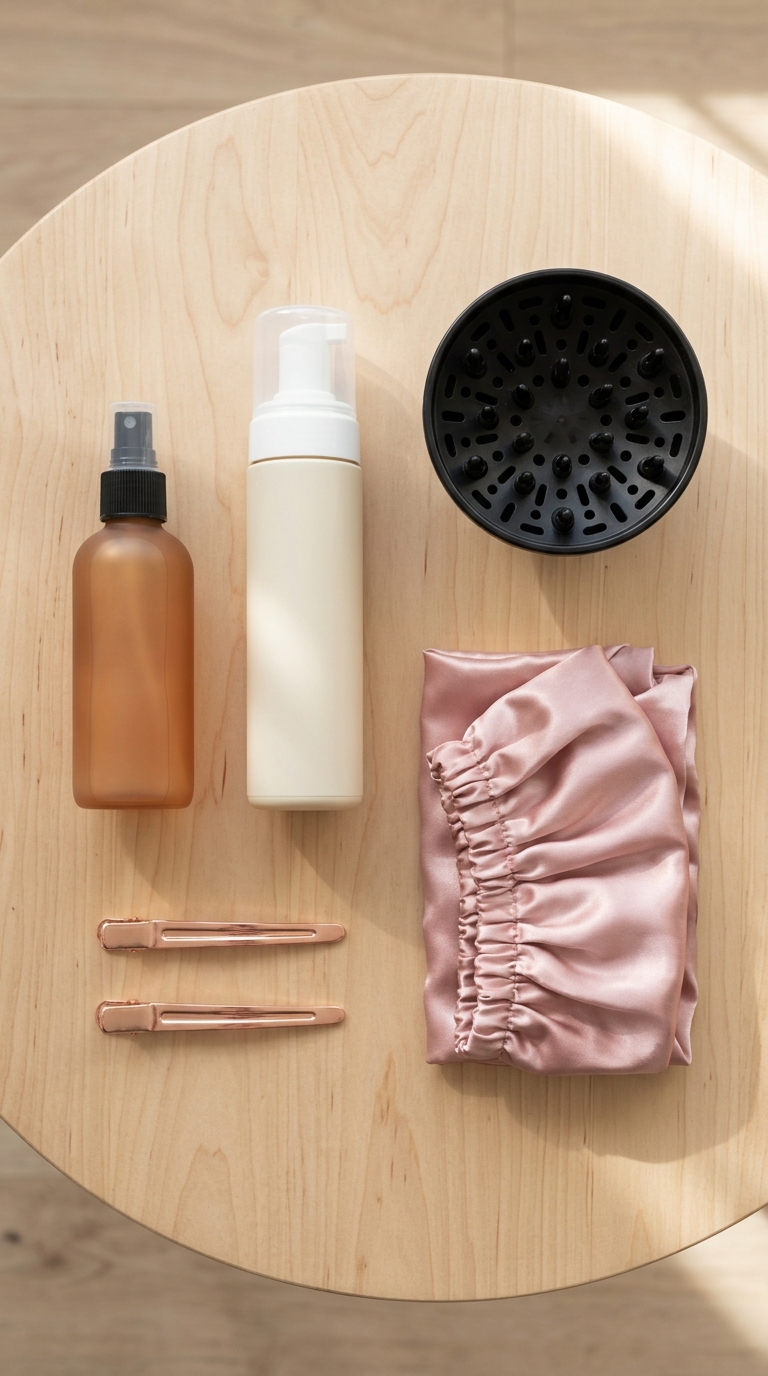
What You'll Need
-
A leave-in conditioner spray with heat protection, to add moisture to damp bangs and guard them before diffusing
-
A lightweight curl mousse, to give the fringe soft hold without weight
-
A bowl diffuser attachment, to dry the bangs with gentle air that keeps the curl shape
-
A satin bonnet or a satin hair scarf, to protect the front pieces while you sleep
-
Flat duckbill clips, to hold the curtain split in place while the bangs set
Step 1: Get a Cut That Allows for Shrinkage
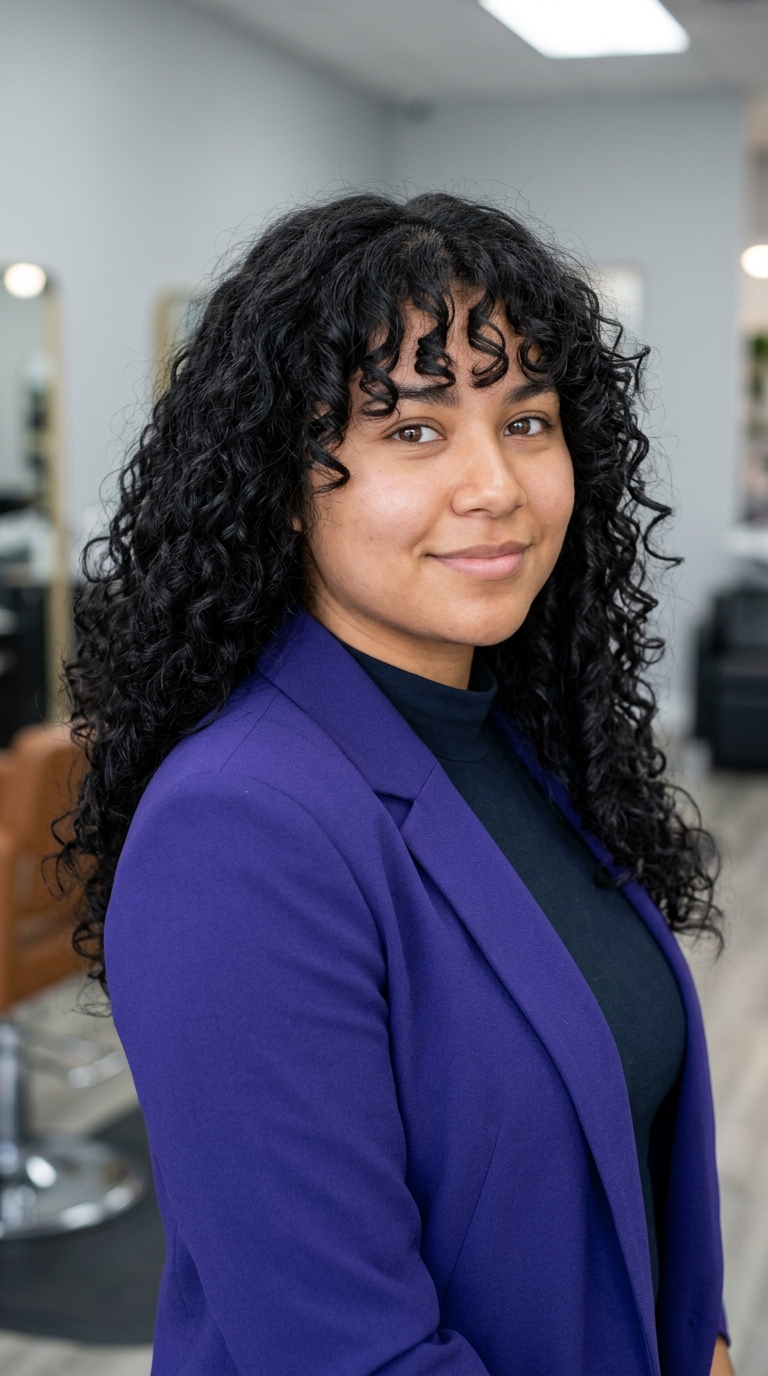
Ask for the bangs to be cut on dry, defined curls, never on wet hair. Wet curls stretch out and look much longer than they are. Curly bangs can spring up an inch or two as they dry, so a wet cut often ends up far shorter than planned.
The section itself is small. A common way to take it is a triangle part that starts at the curve of the crown and ends just past the eyebrows. The stylist then cuts curl by curl and leaves more length on the pieces near the ears, so the curtain shape falls in a soft slope.
Why it works: a dry cut shows where each curl will really sit. You and the stylist can see the final length while you cut, not after the hair dries. Always ask for the bangs longer than you think you want. Tight curls and coils shrink more than loose waves, so they need the most extra length.
Step 2: Prep Damp Bangs With Leave-In Spray

On wash day, start the routine while the bangs are damp, not dripping and not dry. Spray a light layer of leave-in conditioner over the front section and smooth it through with your fingers. If you plan to diffuse, pick a leave-in spray that also has heat protection, so this one product does both jobs.
Why it works: damp hair takes product in an even way, and the front pieces dry out faster than the rest of the head. A light leave-in gives them moisture before any hold product goes on. Keep the layer thin. Heavy products weigh down the lighter front strands and the bangs sit flat against the forehead.
Step 3: Layer On a Light Curl Product

Next, add a small amount of light curl product over the leave-in. For the fringe alone, use about a pea sized amount of cream or a golf ball sized puff of mousse. That is enough for this small section. Work it through the bangs with your fingers and stop there.
Why it works: the order matters. Moisture goes on first and hold goes on second, so the hold product seals the moisture in. Too much product is the most common reason curly bangs go stiff, greasy or flat. Do not stack one product on top of another on just a few curls. One light hold product is plenty.
Step 4: Set the Curtain Shape While Wet
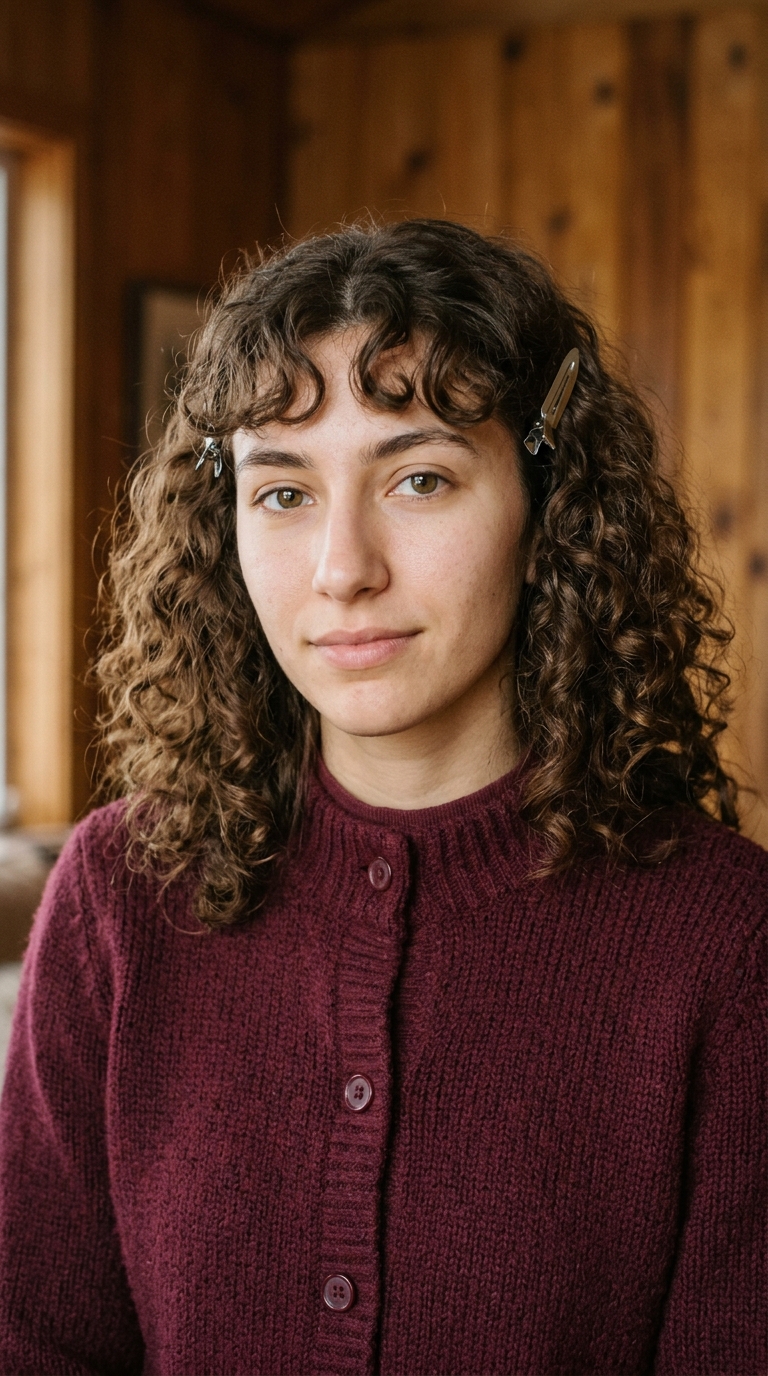
While the bangs are still wet, set the shape they will dry in. Part them in the middle and guide each side away from the center of the face. Twist or finger coil small pieces away from the face so the curls form clean clumps that fall to each side.
Clip each side in place with a flat duckbill clip if the pieces keep falling forward. Put the clip in gently at the root and do not pull the hair tight. The clips hold the split while the hair starts to dry.
Why it works: curls dry in the shape they are left in. If the bangs dry hanging straight down over the forehead, they will fight the curtain shape all day. Setting the split early means the dry hair already falls the right way.
Step 5: Diffuse on Low Heat and Airflow

Fit the bowl diffuser on your dryer and set the dryer to low heat and low airflow. Cup one section of bangs in the bowl and lift it toward the root. Hold it there for 30 to 60 seconds, then move to the next section. Keep your hands off the hair between each cup.
Stop when the bangs feel about 80 to 90 percent dry and let the last bit of moisture dry in the air. Why it works: gentle air in a bowl supports the curl instead of blowing it apart. Strong heat and fast air break up the clumps you just made, and touching the hair while it dries does the same damage. Hair that is left a little damp at the end keeps more of its softness and shine.
Step 6: Finish the Dry Shape
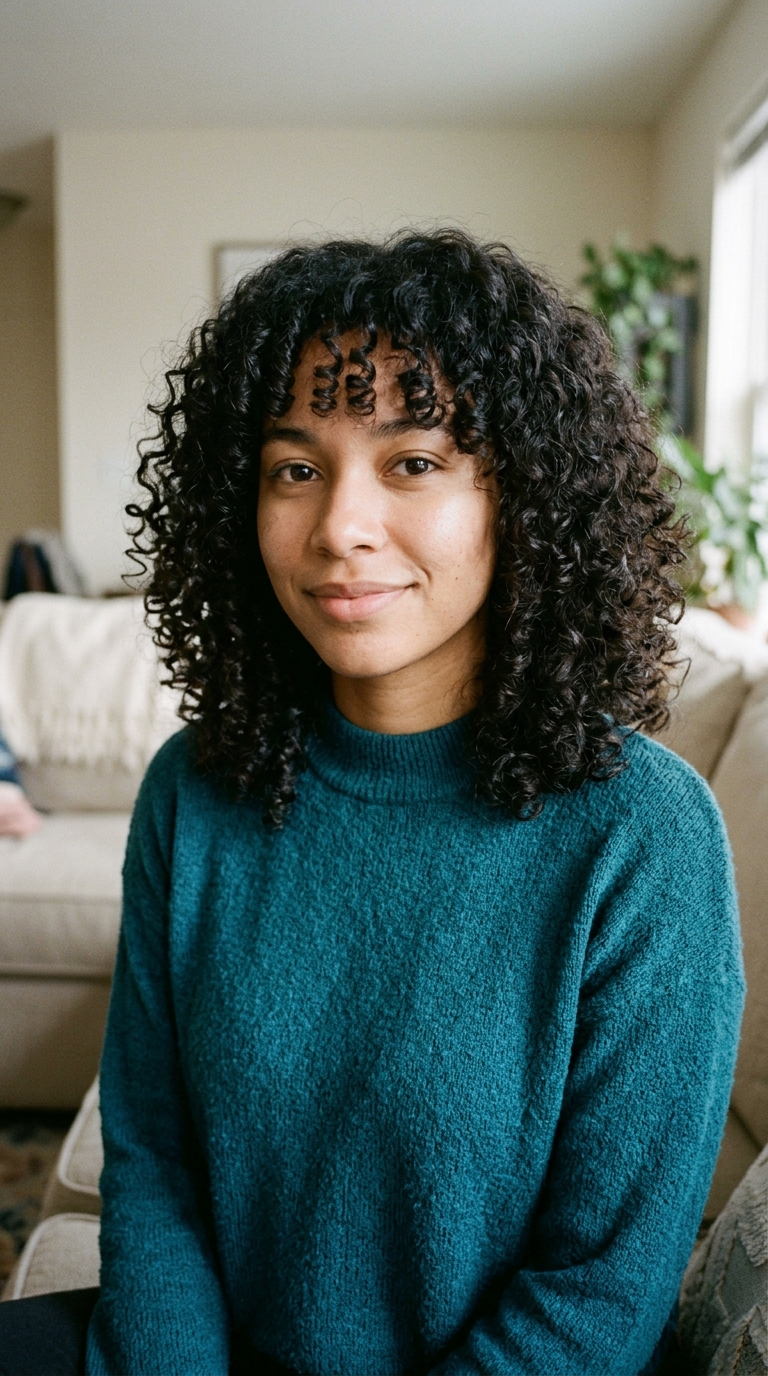
Once the bangs are fully dry, take the clips out and look at the shape with fresh eyes. Separate any big clumps with your fingers and nudge each side into its place. If one curl sits oddly, twist that one piece on its own instead of redoing the whole front.
Why it works: dry hair shows the true shape, so this is the right time to judge it. Small fixes with your fingers keep the curl pattern intact. Never brush or comb the bangs when they are dry. Dry brushing breaks the clumps apart and the fringe puffs up and stays that way until the next wash.
Step 7: Protect Your Bangs Overnight
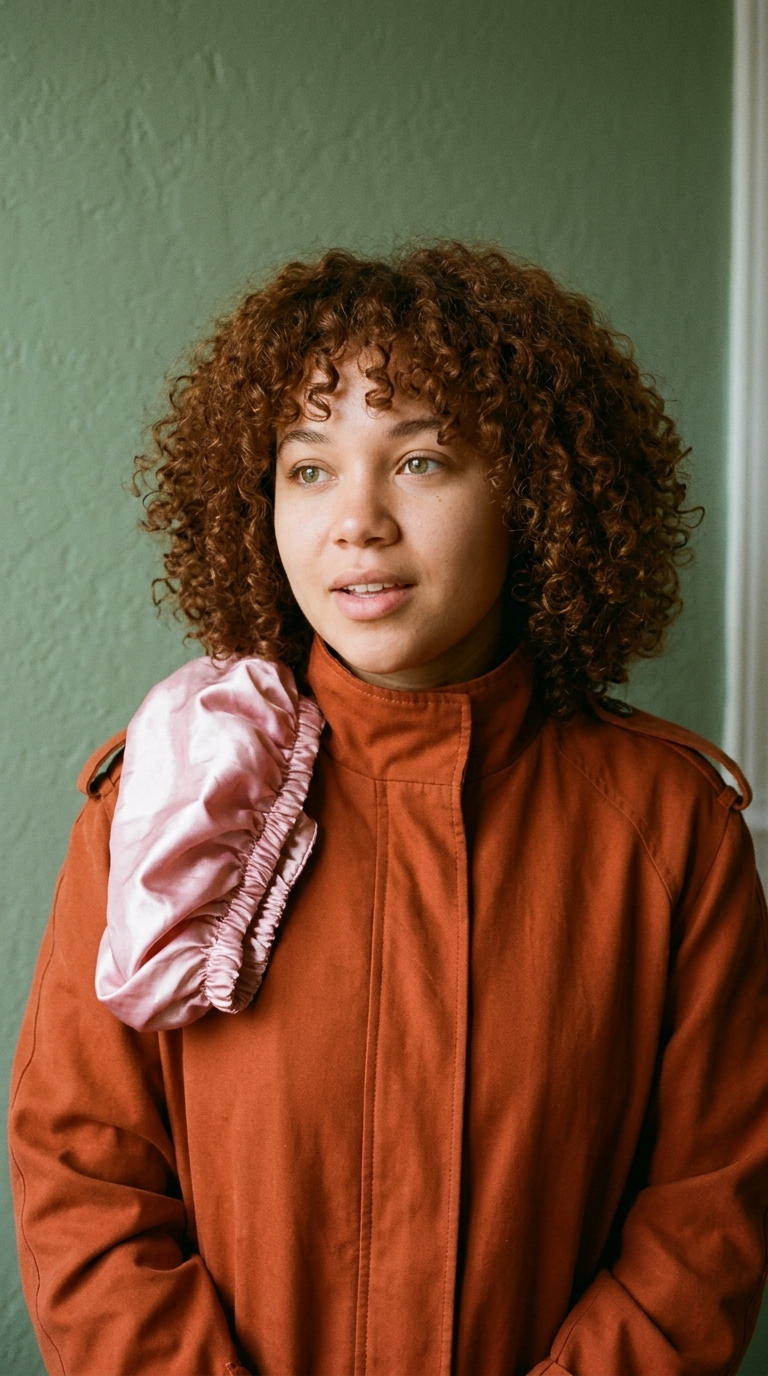
Before bed, cover your hair with a satin bonnet or tie a satin scarf over it, with the bangs lying in their normal split under the cover. Make sure the front pieces are not folded, bent or pressed flat against your forehead.
Why it works: satin is smooth, so curls slide over it instead of rubbing against it all night. Cotton pillowcases pull moisture out of the hair and rough up the front pieces first, because they sit right at the edge of the pillow. Bangs that sleep on cotton often wake up bent and flat and need a full restyle. Bangs that sleep on satin keep most of their shape.
Step 8: Refresh Bangs Between Washes

In the morning, you do not need a full wash or a full restyle. Lightly mist the bangs with water. Do not soak the whole fringe. Add a tiny amount of leave-in or styler only if a piece looks dry or has lost its shape.
Finger coil the pieces that lost their curl and leave the good pieces alone. Let the bangs dry in the air, or diffuse them for a short burst on low heat. The whole refresh should take 2 to 3 minutes.
Why it works: water wakes up the product that is already in the hair, so you rarely need much new product. A light mist fixes the front without making it heavy or greasy by midday. Most days, only a few curls need help.
Common Mistakes
-
Cutting the bangs wet or straight across, then watching them shrink an inch or two as they dry
-
Taking a lot of length off at once instead of cutting a little and checking the dry shape
-
Using heavy gel on the fringe, which leaves it flat, stiff and stuck to the forehead
-
Touching, scrunching or shaking the bangs while they dry, which breaks the clumps and brings frizz
-
Brushing or combing dry bangs, which puffs the fringe up until the next wash
-
Sleeping on cotton with the fringe pressed into the pillow, which bends and flattens it overnight
Pro Tip
Go to your cut with your hair styled the way you wear it most days. Arrive with it dry and unrefreshed. A curl specialist can then see where your curls really land and cut the bangs to that position, instead of guessing how much they will shrink.
The Bottom Line
Curly curtain bangs work when you plan for shrinkage and keep everything light. Cut them dry and a little long. Use a thin layer of leave-in and one light hold product. Set the split while the hair is wet, diffuse on low heat without touching, and sleep in satin. After that, a short mist and finger coil refresh in the morning is all most days need. Plan on a small trim every 4 to 8 weeks, because hair grows about half an inch a month and bangs reach the eyes fast.
FAQs
How much do curly curtain bangs shrink when they dry?
Most curly bangs spring up about an inch or two as they dry. Loose waves shrink less and tight coils shrink more. That gap is the reason the cut must happen on dry hair and the length must start longer than the final look you want.
How do I refresh curly curtain bangs on day two?
Mist them lightly with water, add a tiny amount of leave-in only where a piece looks dry, and finger coil the curls that lost their shape. Let them air dry or diffuse them for a short time on low heat. Do not soak the whole fringe, because wetting it fully starts the routine over and can make it heavy.
Which products weigh curly bangs down?
Heavy gels, thick creams and oils used in large amounts weigh the front down first, because the bangs are a small and light section of hair. Light leave-in sprays and mousse give moisture and hold without that weight. For the fringe alone, a pea sized amount of cream or a golf ball sized puff of mousse is enough.
Is it better to diffuse curly bangs or let them air dry?
Both can work. Air drying is the gentlest choice and suits loose waves well. Diffusing on low heat and low airflow is faster and gives more root lift, which helps bangs that tend to sit flat. If you diffuse, cup the hair in the bowl for 30 to 60 seconds at a time and stop at about 80 to 90 percent dry.
How often do curly curtain bangs need a trim?
Guides give a range of every 4 to 8 weeks. Shorter bangs need shaping more often because a small amount of growth changes them fast. Hair grows about half an inch a month on average, so after 6 to 8 weeks the front pieces often start to reach the eyes. Book the trim when the shape stops falling into place after a refresh.