How to Get Rid of Frizz in Thick Hair at Home

Quick answer: thick hair frizzes because it is dry. When a strand runs low on moisture, the outer layer of the strand lifts and pulls water out of the air, and the hair swells and puffs up. The fix is a routine, not one miracle product. Wash gently, condition well, seal the moisture in while the hair is still wet, dry the hair without friction, and protect it overnight. Follow the 12 steps below in order, and thick hair can stay smooth for days, not hours.
If you have thick hair, you know how this goes. A smooth blow-dry in the morning can turn into a halo of fuzz by lunchtime. Frizz is not your hair misbehaving for no reason. Each strand is covered by an outer layer called the cuticle, and it works like overlapping scales. When the hair is dry or handled roughly, those scales lift. Humid air then rushes in through the lifted layer and swells the strand unevenly, so the strands bend away from each other. That bending and swelling is what you see as frizz.
Thick hair shows frizz more than fine hair because everything is multiplied. There is more hair on your head, each strand is wider, and the ends are older and drier because scalp oil has further to travel. Thick hair is also often wavy or curly, and the follicle shape that grows those textures leaves the cuticle less flat to begin with. This is also why smoothing oil over dry, frizzy hair never lasts. You are sealing a strand that has nothing inside it. Put the moisture in first, then seal it, and the same hair behaves very differently.
Time: about 45 minutes on wash day, 5 minutes on other days Difficulty: beginner Steps: 12
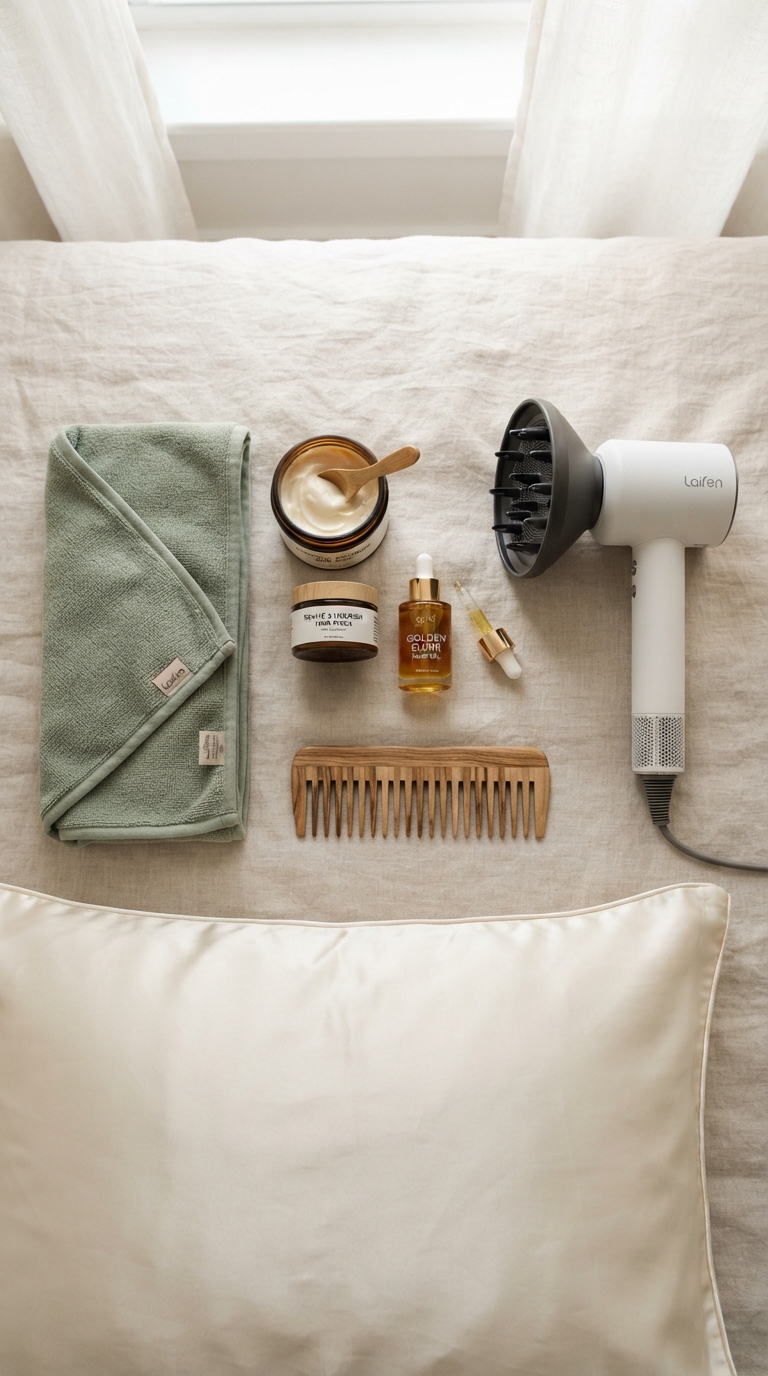
What You'll Need
-
A hydrating, sulfate-free shampoo. It cleans without stripping the oils thick hair needs.
-
A rich conditioner made for dry, frizzy hair. It puts moisture back after every wash and coats each strand.
-
A deep conditioning hair mask. This is the weekly repair step for dryness and damage.
-
A leave-in conditioner. It sets the moisture level of your hair while the hair is soaking wet.
-
A styling cream and a light gel or foam. The cream gives softness and definition, and the gel or foam gives hold.
-
An anti-frizz serum or argan oil. It seals everything in and puts a barrier between your hair and humid air.
-
A wide-tooth comb or detangling brush. It takes knots out of wet hair without snapping strands.
-
A microfiber towel or a soft cotton T-shirt. Both dry hair without the friction of a rough bath towel.
-
An ionic blow dryer with a diffuser attachment. It dries faster with less heat time, and the diffuser dries curls gently.
-
A heat protectant spray. It guards your hair every time a hot tool touches it.
-
A silk or satin pillowcase and a silk scrunchie. They protect your hair and your style while you sleep.
Step by Step
Step 1. Wash with a Hydrating Shampoo, and Wash Less Often
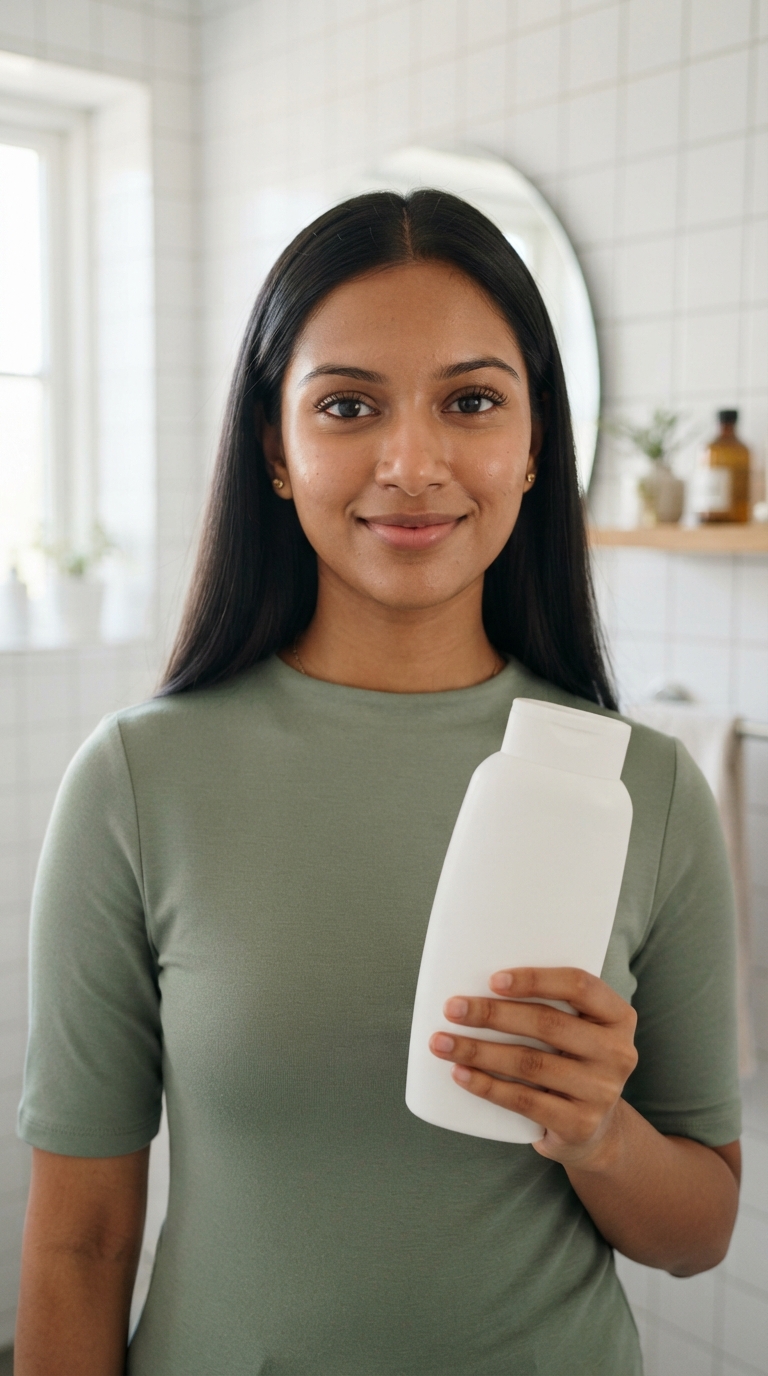
Frizz control starts with your shampoo. A harsh formula strips away the scalp oils that thick hair relies on, and the hair then spends days drinking humidity to make up for it. Every wash also resets the moisture in thick hair, and thick hair is slow to build it back. That is why washing too often keeps the dryness cycle going.
Choose a nourishing, frizz-fighting shampoo that cleans without that squeaky, stripped feeling. Stylists point out that even straight hair does well with formulas made for curls, because they clean gently and leave moisture behind. Work the shampoo into your scalp only, in two or three sections, and let the rinse carry it through the lengths. Wash in lukewarm water, not hot, because hot water strips oil and leaves the strand more porous. About twice a week is the routine most thick-hair guides land on, with dry shampoo at the roots on the days in between.
Step 2. Condition Every Wash and Finish with a Cold Rinse
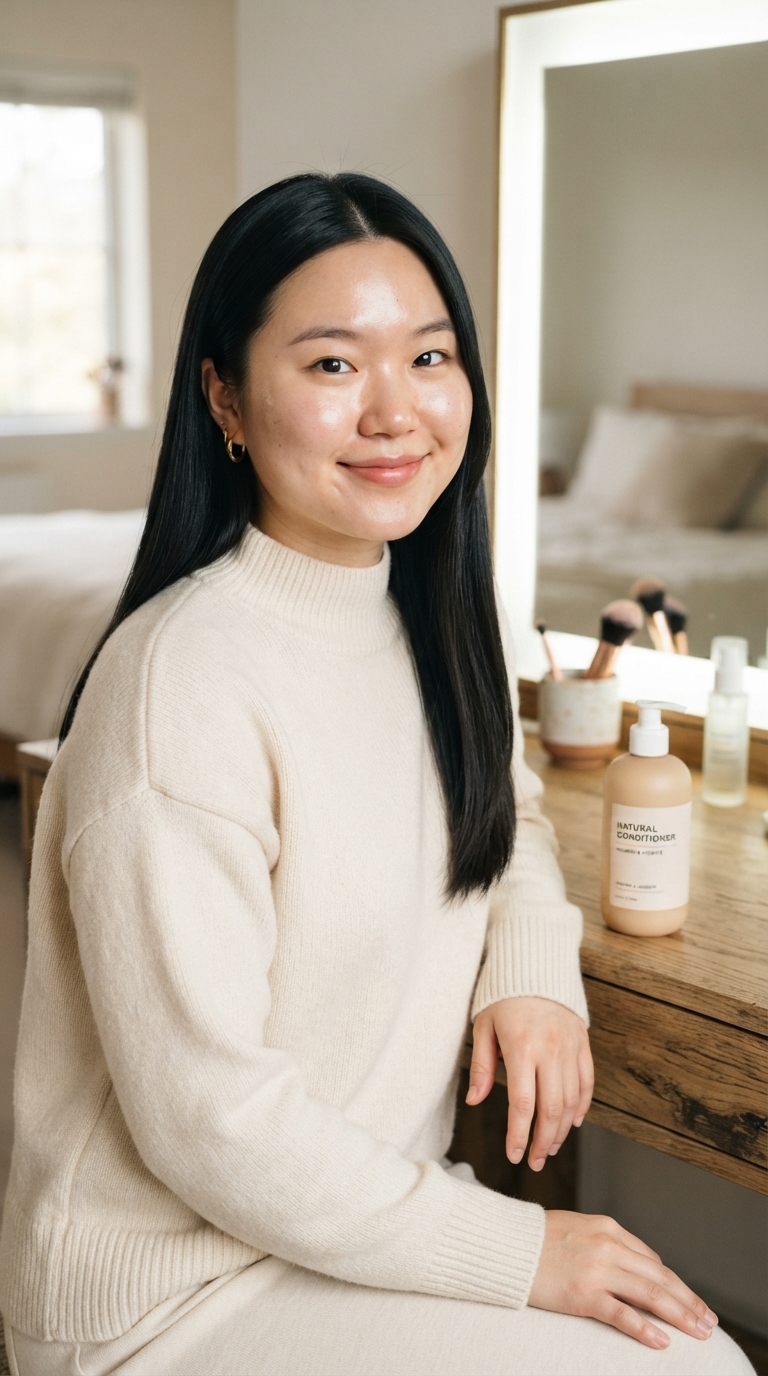
On thick hair, conditioner is not an extra step you can skip. Shampoo takes out dirt, but it takes some moisture with it. Conditioner puts that hydration back and coats each strand, so the hair can hold its own against the air around it. A coated strand with a flat cuticle takes in far less humidity.
Work the conditioner through your mid-lengths and ends, where thick hair is oldest and driest, and leave it on for a few minutes while you finish your shower. If your hair is thick but the strands themselves are fine, pick a lighter formula that hydrates without leaving the hair limp or greasy. Then finish with a cold rinse for about ten seconds. Cold water helps the cuticle lie flatter and keeps the conditioner sealed in, so your hair starts the day smooth instead of raised.
Step 3. Deep Condition with a Mask Once a Week

A mask does what a two-minute conditioner cannot. It hydrates deeper, helps strengthen the hair, smooths the cuticle and starts to repair the damage that makes hair porous in the first place. Porous hair is frizz waiting to happen, because it drinks moisture from the air all day. Repairing the porosity lowers your frizz baseline week by week.
Once a week, swap your regular conditioner for a deep conditioning mask. If your thick hair is very dry, do it twice a week. Smooth the mask over your lengths and comb it through so every strand is coated. Leave it on for at least 15 minutes. Very thirsty hair can keep a mask on much longer, even overnight. Rinse with cool water. Of all the habits in this list, this is the one that changes how thick hair behaves over a month.
Step 4. Detangle in the Shower, Never Dry
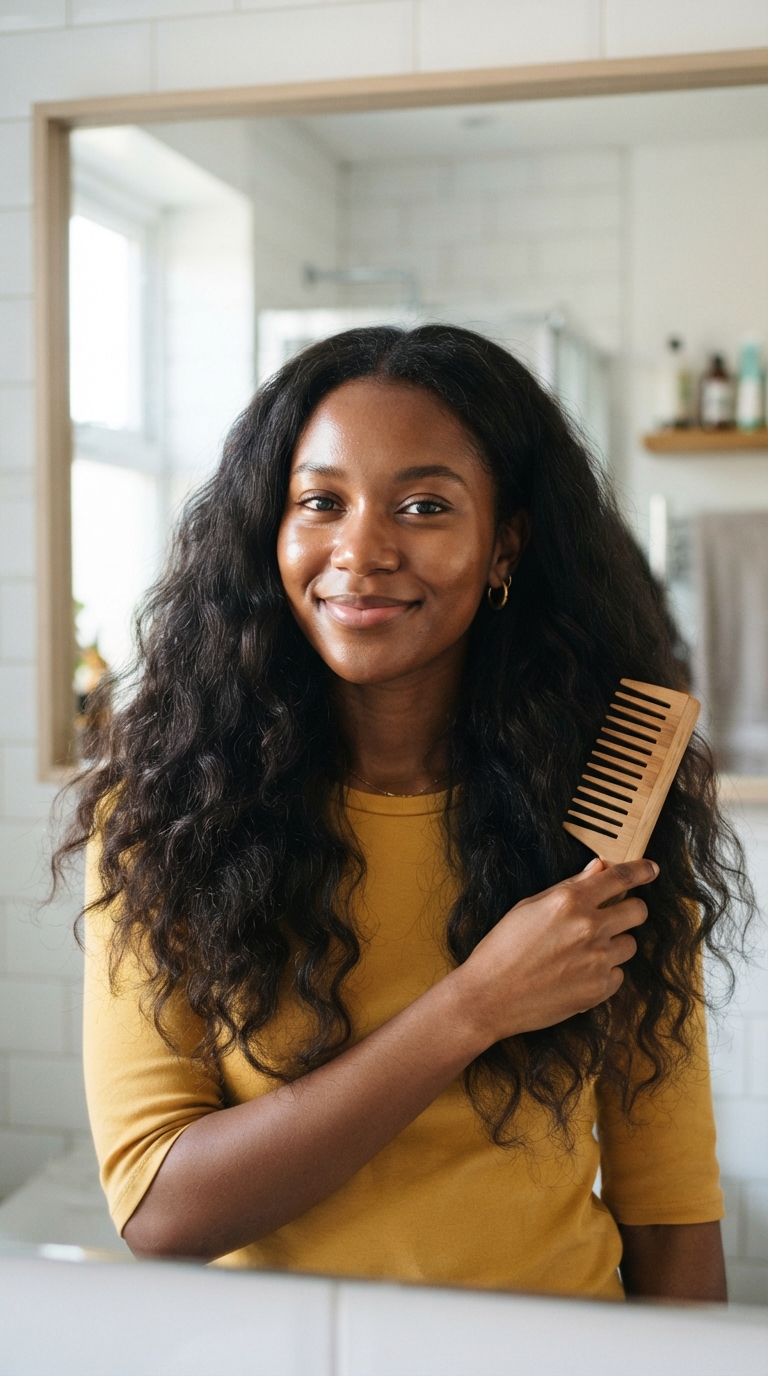
Dry detangling is where thick hair breaks, and broken strands of uneven length are a kind of frizz no product can fix. Wet hair that is loaded with conditioner behaves differently. It has the slip that lets knots slide out instead of snapping.
Detangle while your conditioner is in, in the shower. Start with your fingers, then move to a wide-tooth comb or a detangling brush. Work from the ends upward, in sections. If you drag a comb from the roots down in one pass, you only pack the tangles tighter at the bottom. Hair that mats easily also benefits from a detangling product before shampooing.
Step 5. Put Leave-In Conditioner on Soaking Wet Hair

With leave-in conditioner, timing is everything. It works best on hair that is still dripping wet, before a towel has touched it. On soaking hair the product spreads evenly and fills each strand while the strand is swollen with water. That sets the moisture level of your hair before drying even begins.
Curl and frizz experts put it bluntly. If your hair looks frizzy while it is wet, it will look frizzy when it dries, so it should already look smooth and defined at this stage. Work the leave-in through thick hair in sections. One handful smoothed over the top leaves the layers underneath dry, and those are the layers that puff up later.
Step 6. Layer Your Products Instead of Using One

One product on its own rarely controls thick, frizzy hair. Each type of product has a different job. A leave-in gives moisture. A cream gives softness and definition. A gel or foam gives hold. Used together in layers, they keep the hair hydrated and in place from wash day to day three.
Apply them in that order, on wet hair, a section at a time. Stylists who dress very thick and curly hair build the routine exactly this way. The common mistake is doubling the amount of one product instead of layering different types. Too much of a single product weighs thick hair down, and the hair still ends up without the hold it needed.
Step 7. Seal It In with Serum and Oils

Think of serum as the lock on the door. Used on wet or damp hair, it seals in the moisture from your leave-in and puts a barrier between your strands and the humid air outside. Smooth it over the surface of your hair and through the ends, because that is where thick hair frizzes first and worst.
Oils follow one rule. Oil seals moisture in, but it does not create moisture, so oils always go on after a water-based product, never instead of one. Argan oil is the everyday finisher, rich in antioxidants, fatty acids and vitamin E, and a few drops pressed through the ends each day add shine without grease. Olive oil is the softener, massaged in and combed through with a wide-tooth comb when hair feels coarse and wiry. For a deeper treatment before wash day, warm coconut oil between your hands, coat the hair from roots to tips, and leave it for about 30 minutes before you wash as usual.
Step 8. Blot Dry with a Microfiber Towel or a T-Shirt

A rough cotton towel is a frizz machine. Its loops catch on the cuticle and rough it up at the exact moment when wet hair is at its weakest. That friction is one of the main causes of the breakage and knots that turn into frizz tomorrow.
Swap the bath towel for a microfiber towel or a soft cotton T-shirt, and blot or gently squeeze the water out instead of rubbing. If your hair is very wavy or curly, try plopping. You gather the hair on top of your head inside the T-shirt, so it dries in its own shape instead of being dragged down. Whatever you use, never rub.
Step 9. Dry the Right Way for Your Hair Type
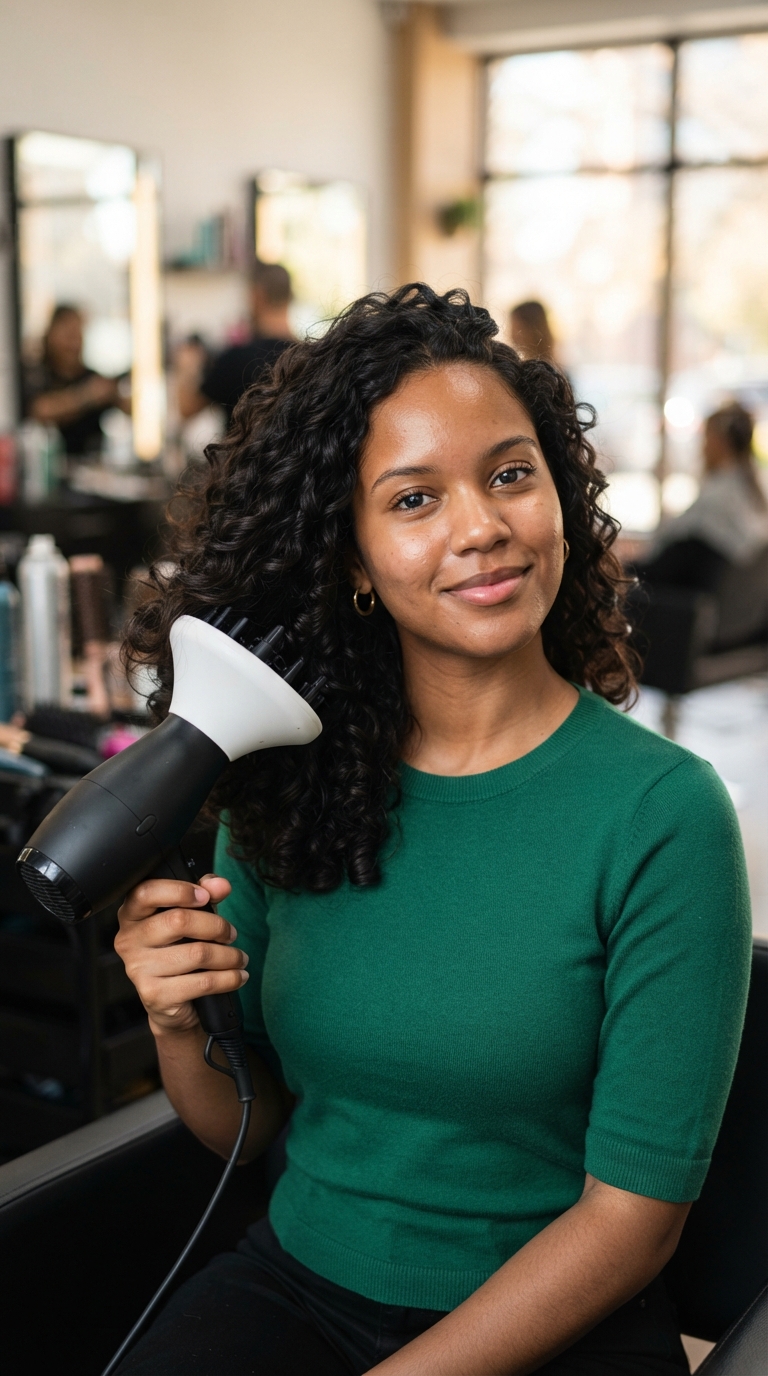
How you dry matters as much as what you put in. Air drying works, but only when your hair dries in a product rather than in open air alone. Apply an air-dry styler, or the layered creams from step 6, to damp hair. Arrange the hair the way you want it to sit, then leave it completely alone while it dries. Twisting the hair into sections, or braiding it loosely, gives thick hair an even wave pattern to dry into.
If you blow dry, an ionic dryer is the better tool. Ionic dryers break down the water sitting on your hair, so it dries faster and spends less time under heat. Work in sections and point the airflow down the strand, never up it. If your hair is wavy or curly, use the diffuser instead. Cup a section in the diffuser and hold it still, dry upside down if you want root volume, and stop at about 80 to 90 percent dry. Letting the last bit air dry leaves curls softer and less frizzy than drying them bone dry with heat.
Step 10. Use Heat Protectant Before Any Hot Tool
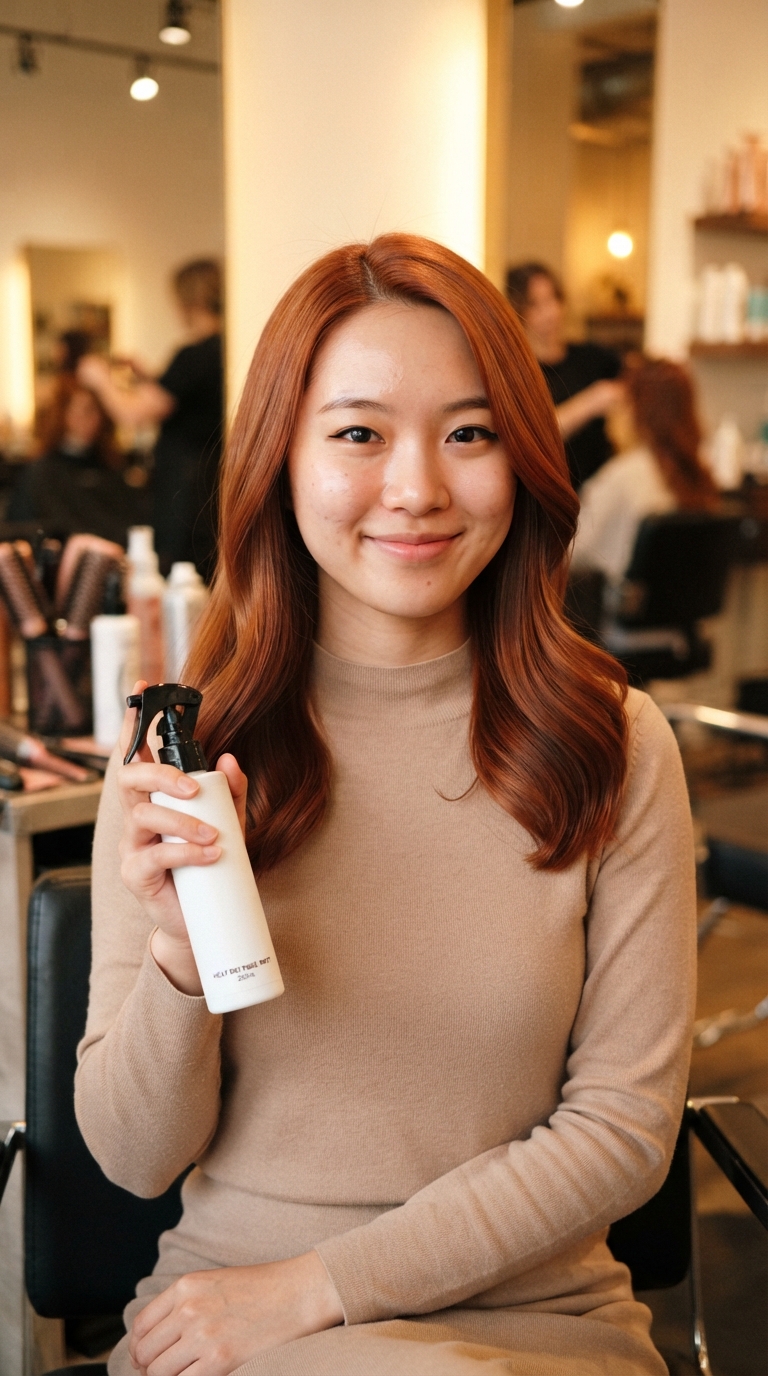
Heat damage and frizz feed each other. Damaged hair turns porous, porous hair drinks in humidity, humid hair frizzes, and then it gets straightened again. Heat protectant is how you break that loop.
Spray it on before a straightener or curling wand touches your hair, every single time. Then use the lowest temperature that still works on your hair. With protectant on, thick strands usually need around 375°F (190°C) at most, and never the highest setting on the tool. Work in small sections no wider than the plates, with one or two slow, steady passes. One slow pass heats the hair evenly. Going over the same section six times is how ends turn to straw.
Step 11. Keep Your Hands Off, and Smooth Flyaways the Right Way

The simplest step on this list costs nothing. Once your hair is styled, stop touching it. Every time your hands run through thick hair, they lift the cuticle, break the product seal and bring the frizz back. Stylists who work with curls name touching as one of the main reasons a style falls apart by noon. Arrange your hair, set it, and leave it alone. If the front pieces bother you, pin them back instead of smoothing them down again and again.
For the halo of short flyaways that survives an otherwise good hair day, use hairspray in an indirect way. Lightly mist a brush or comb with anti-frizz hairspray and run it over the surface of your hair. It lays the flyaways down without the crunch that spraying your whole head can leave. For the hairline, spray a clean mascara wand or a toothbrush and brush the stray strands into place. On dry winter days, a laundry dryer sheet rubbed over static frizz works in the same spirit.
Step 12. Trim Split Ends and Sleep on Silk

Split ends are a frizz factory. A split travels up the strand, weakens it and leaves it rough, and rough hair puffs up fast in humidity. No serum can glue a split end back together. The only real fix is cutting them off. Book trims on a steady schedule instead of waiting until the ends look ruined, because on thick hair damage hides in the underlayers until it is well along. In humid climates, stylists add one more tip. Blunt, heavier ends keep their weight and swing, while feathered ends drift into frizz.
Your last step of the day is your pillowcase. Hair spends about a third of its life rubbing against a pillow, and cotton creates friction all night long. You can do everything right at 8 in the evening and undo it by 8 in the morning. A silk or satin pillowcase lets your hair glide instead of drag. If your hair is long and thick, put it in a high, loose bun on top of your head, the style often called a pineapple, held with a silk scrunchie. In the morning, day-two hair needs a light mist of water and a drop of oil, not a full restyle.
Common Mistakes to Avoid
-
Washing every day, or in hot water. Both strip the oils thick hair needs and restart the dryness cycle.
-
Skipping conditioner, or putting leave-in on dry hair. Styling products cannot seal moisture into a strand that has none.
-
Rubbing hair with a cotton towel, or detangling it dry. Friction and breakage are frizz you create yourself.
-
Piling on more of one product instead of layering. You get weight without hold, and the frizz stays.
-
Touching finished hair all day, and straightening on maximum heat without protectant. One undoes the seal, the other damages the strand for months.
Pro Tip
Do every styling step on dripping wet hair and judge the result before drying starts. If your hair looks frizzy while it is wet, it will look frizzy when it dries. The two minutes you spend in the shower, raking products through section by section until the hair looks smooth and defined, decide the whole day. Most frizz routines fail at this point, not at the product shelf.
The Bottom Line
Frizz control on thick hair is a routine, not a product. Wash gently and less often, condition every time, feed the hair with a mask each week, and build your styling in layers on wet hair. Dry without friction, protect before heat, and sleep on silk. On a truly humid day your hair will still take in some moisture, and that is fine. Plan for your climate, accept a softer finish, and the routine will keep the bad days rare and the good days easy to repeat.
Frequently Asked Questions
Why does thick hair frizz more than other hair types?
Three things stack up. First, thick and coarse strands are naturally drier, especially at the ends, because scalp oil has further to travel down a wider and often wavier strand. Second, the follicle shape that grows wavy and curly hair leaves the cuticle less flat, so moisture from the air gets in more easily. Third, there is simply more hair on your head to misbehave. When the cuticle lifts, each strand swells and separates from the strands around it. On a full head of thick hair, that reads as volume in all the wrong places.
Can frizz in thick hair be removed permanently?
Not permanently. Frizz is your hair's natural response to dryness and humidity, and new hair keeps growing in its natural texture. What does exist are long-term smoothers. Salon keratin treatments and Brazilian blowouts coat the hair and reshape it, so it dries smoother and resists humidity for a few months at a time. Stylists rate keratin as the strongest of these options for frizzy or damaged hair. Everything else is the routine in this guide. The honest goal is hair that behaves on most days because you maintain it each week, not hair that never frizzes again.
How often should thick, frizzy hair be washed?
About twice a week is where most thick-hair guides land. Washing more often strips the oils thick hair needs and restarts the dryness cycle. Washing much less lets product and sweat build up on the scalp. Use dry shampoo at the scalp on the days in between to soak up oil. If you exercise every day, rinse with water and condition the ends instead of doing a full shampoo each time. Let your scalp make the final call rather than the calendar. An oily scalp may need a third wash, while a dry scalp can stretch to every five days.
Does rinsing with cold water really help frizz?
Yes, within limits. Hot water strips the natural oils from your scalp and leaves hair more porous. A cold rinse after conditioning helps the cuticle lie flatter and keeps the conditioner sealed in, so the hair starts smoother and takes in less humidity. On its own, cold water will not rescue hair that is dry and damaged. Think of it as a finishing step on top of good conditioning, not a treatment by itself. Ten seconds at the end of the shower is enough, and the wash itself should be lukewarm, not cold.
What is the fastest fix for frizz on a humid day?
Work with what is already on your head. Wet your palms lightly and warm one or two drops of argan oil or serum between them. Then press over the frizzy surface and ends. Do not rub. The water wakes up the products already in your hair, and the oil seals everything back in. After that, keep your hands off your hair completely, because touching is what opens the frizz up again. If a few flyaways remain, a brush misted with hairspray will smooth them down. And do not re-straighten dry, frizzy hair on high heat without protectant. That swaps one humid day for months of damage.